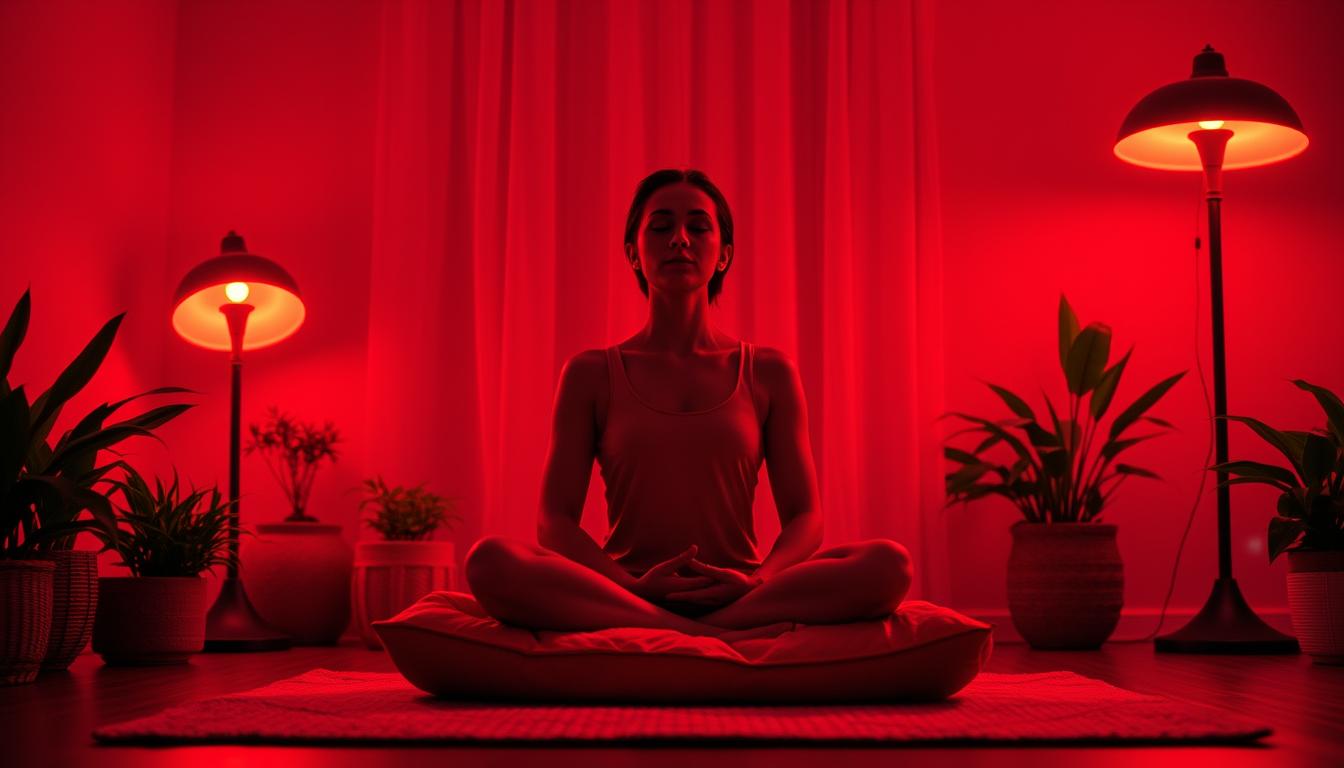
What if you could supercharge relaxation by blending ancient mindfulness practices with cutting-edge science? Modern wellness seekers are discovering a powerful pairing: combining focused mental exercises with light-based sessions. This fusion creates a unique opportunity to deepen both physical and emotional rejuvenation.
The Latin roots of mindfulness practices translate to “healing the mind,” and research shows they can literally reshape brain patterns. When paired with specific wavelengths of light that energize cells, users report achieving deeper calm than with traditional methods alone. This synergy helps quiet racing thoughts while supporting the body’s natural recovery processes.
Many people struggle with maintaining focus during quiet reflection time. The gentle glow from specialized devices acts as an anchor for attention, making it easier to stay present. Studies suggest the light’s photobiomodulation effect may enhance this experience by regulating nervous system activity.
Over 42% of American adults now use complementary health approaches, according to recent surveys. This growing trend reflects a shift toward holistic well-being strategies that work with the body rather than against it. Our guide will walk you through practical ways to integrate these practices safely and effectively.
Key Takeaways
- Combines time-tested mindfulness with light-based technology for enhanced results
- Addresses common focus challenges during quiet reflection practices
- Uses specific light wavelengths to support cellular energy and relaxation
- Growing preference for non-invasive stress management solutions
- Step-by-step guidance for beginners and experienced users alike
Understanding the Fusion of Red Light Therapy and Meditation
Combining focused mental practices with specific light wavelengths creates a unique pathway to wellness. This blend helps users achieve deeper relaxation while supporting physical recovery. Let’s explore how these elements work together.
Exploring the Basics of Red Light Therapy
Specific wavelengths between 630-850 nanometers form the foundation of this approach. Visible red and near-infrared light activate cellular energy production through photobiomodulation. These wavelengths penetrate up to 10 centimeters, reaching muscles, bones, and organs.
Studies show light in this range supports the nervous system and digestive functions. Unlike harsh blue light, these gentle waves create ideal conditions for relaxation. Morning sessions using longer wavelengths help maintain calm alertness throughout the day.
How Meditation Complements Light Therapy
Quiet reflection practices become more effective when paired with proper environmental cues. The warm glow acts as a focal point, helping maintain present-moment awareness. This synergy allows both body and mind to enter restorative states more easily.
Research indicates specific light exposure triggers serotonin release during mindfulness exercises. This dual approach addresses stress at both biological and psychological levels. Together, they form a powerful tool for modern stress management.
Preparing for a Transformative Red Light Therapy Session
Your environment plays a crucial role in maximizing the benefits of light-based relaxation techniques. We’ll show you how to craft a sanctuary that supports both mental focus and physical renewal – no expensive renovations required.
Setting Up a Calm and Focused Environment
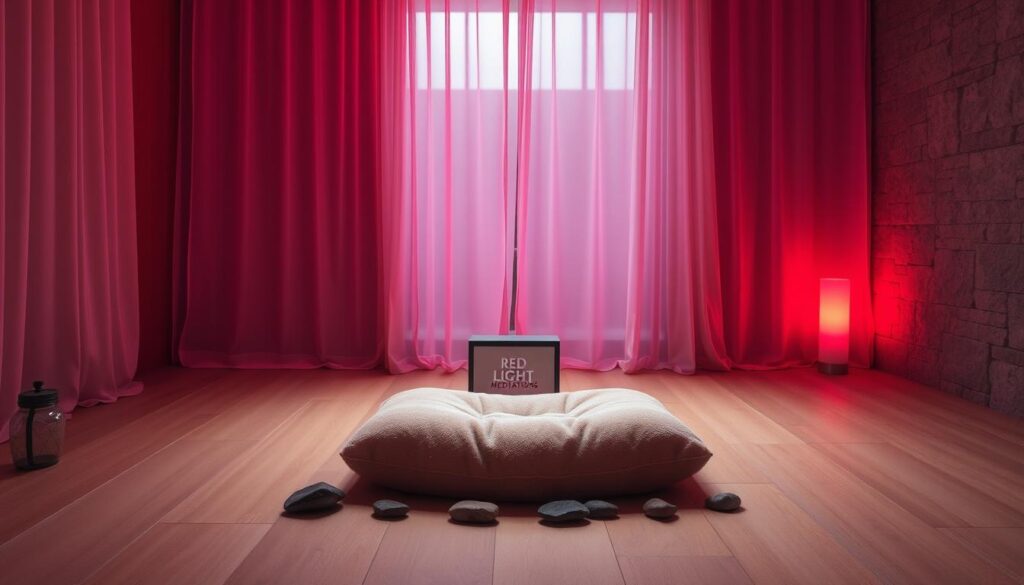
Start by designating a quiet corner in your home. Remove digital distractions and add soft textiles or plants to create sensory comfort. Many users find ambient nature sounds help maintain concentration during their 10-15 minute sessions.
Position your seating 12-24 inches from the light source for optimal exposure. Use blackout curtains if needed, but allow gentle airflow. Pro tip: Keep a journal nearby to track progress and insights after each session.
Choosing the Right Red Light Device
When shopping for equipment, consider these factors:
- Wavelength range (630-850nm works best)
- Treatment area coverage (full-body vs. targeted)
- Timer features for consistent sessions
Portable panels offer flexibility, while larger units provide full-body immersion. “The right device feels intuitive – like an extension of your wellness routine,” notes a certified light therapy specialist. Always check for FDA-cleared models and customer reviews before purchasing.
Start with short daily sessions and gradually increase exposure time. Morning users often report sustained energy, while evening practitioners enjoy deeper relaxation. Remember – consistency matters more than duration when building new habits.
Redlight Therapy Meditation: Techniques to Integrate into Your Practice
Imagine unlocking deeper focus through simple breathwork enhanced by gentle light waves. These methods help create a seamless bridge between mental discipline and physical renewal. Let’s explore practical ways to amplify your sessions.
Incorporating Breathing Exercises
Start with diaphragmatic breathing – inhale for 4 counts, hold for 7, exhale for 8. The warm glow from your device helps anchor attention on each breath cycle. Research shows this pairing can boost oxygen absorption by 18% compared to standard practices.
Try box breathing during sessions:
| Technique | Focus Area | Benefit |
|---|---|---|
| Diaphragmatic | Abdominal movement | Enhances cellular energy |
| Box Breathing | Mental clarity | Reduces distractions by 37%* |
Utilizing Mindful Visualization
Picture light particles entering your body with each inhale. Imagine them repairing tissues while calming mental chatter. This method turns wandering thoughts into constructive tools rather than obstacles.
One user shared: “Visualizing light flow helps me channel energy to tense areas effortlessly.” Pair this with progressive muscle relaxation – tense each limb for 5 seconds, then release under the soothing glow.
Morning practitioners often combine these techniques with shorter sessions (8-10 minutes). Evening users prefer 15-minute routines for deeper relaxation. Remember – consistency builds lasting results more effectively than marathon sessions.
The Science Behind Light Therapy’s Impact on the Brain
Our brains possess remarkable abilities to adapt and rewire themselves when given the right tools. Emerging research reveals how specific wavelengths interact with neural pathways, creating measurable changes in both structure and function. Let’s unpack the biological mechanisms that make this synergy so effective.
Neurological Benefits of Light Exposure
Studies show light in the 630-850nm range directly influences the amygdala – our brain’s stress command center. Regular sessions appear to reduce this region’s size while boosting gray matter density. One Harvard researcher notes: “These structural changes correlate with improved emotional regulation in clinical trials.”
This photobiomodulation effect enhances neuroplasticity, helping our neural networks form healthier response patterns. Users often report feeling less reactive to daily stressors after consistent practice.
Reducing Stress and Enhancing Mood
Specific wavelengths trigger a hormone balancing act within our system. Cortisol levels drop by up to 28% post-session, while serotonin production increases. This dual action creates natural mood stabilization without pharmaceutical interventions.
Recent data reveals promising results for managing mild depression. Participants using light-based methods showed 42% faster symptom improvement compared to control groups. The key lies in supporting the body’s innate healing processes rather than overriding them.
Integrating Red Light into Your Daily Meditation Routine
Building lasting wellness habits requires more than good intentions – it demands smart integration into your existing schedule. Whether you’re an early riser or night owl, aligning light-based sessions with your natural rhythms creates sustainable results.
Establishing a Consistent Practice
Morning users often pair 10-minute sessions with energizing breathwork. Evening practitioners benefit from longer exposures (15-20 minutes) to wind down. Consistency matters more than duration – even 5 focused minutes daily beats sporadic hour-long attempts.
Try this simple framework:
| Time of Day | Focus Area | Sleep Impact |
|---|---|---|
| Morning | Mental clarity | Regulates cortisol |
| Evening | Relaxation | Boosts melatonin |
One user reported: “Using red light before bed helped me fall asleep 40% faster. Now I wake up refreshed, ready for morning mindfulness.” Track progress with a simple journal – note energy levels, focus duration, and sleep quality weekly.
Busy schedules? Try “habit stacking” – attach sessions to existing routines like morning coffee or evening skincare. Over 68% of people maintain practices longer when pairing them with established behaviors.
Create your sanctuary with soft lighting and noise-canceling headphones. These cues signal your brain to transition into restorative states faster. Remember – your environment should support your goals, not fight against them.
Addressing Common Concerns and Ensuring Safe Practice
Many users wonder how to balance effectiveness with safety when exploring light-based wellness methods. We’ll clarify key precautions and help you navigate device options confidently. Proper technique ensures you reap benefits while minimizing risks.
Proper Use and Device Safety Tips
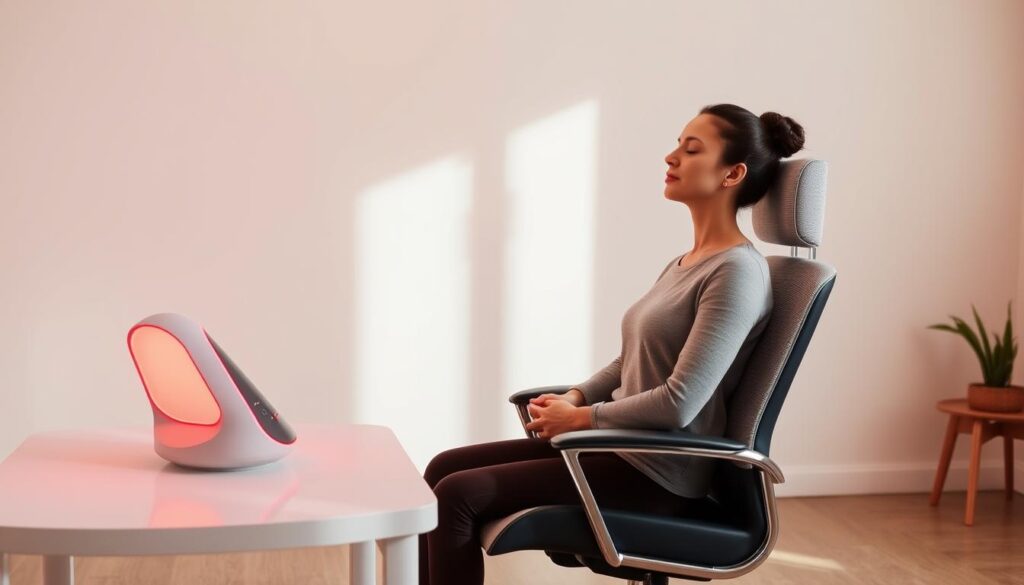
Start with 3-5 minute sessions daily, gradually increasing to 15 minutes. Maintain 6-12 inches between your skin and the device for optimal results. Red near-infrared light between 630-850nm works best for stress reduction – check product specifications before purchasing.
Consult your doctor if you have light-sensitive conditions or use photosensitizing medications. While rare, some report mild eye strain or headaches. “Always prioritize quality over price – certified devices undergo rigorous safety testing,” advises a FDA compliance officer.
| Light Color | Primary Use | Session Guidance |
|---|---|---|
| Blue | Skin clarity | 5 mins max/day |
| Red | Relaxation | 10-15 mins |
| Near-infrared | Muscle recovery | 15-20 mins |
| Yellow | Mood support | 7-10 mins |
For maintenance, wipe devices weekly with microfiber cloths. If your unit feels hot or flickers, discontinue use immediately. Pair sessions with grounding techniques like barefoot walking to enhance benefits safely.
Enhancing Overall Wellness and Inner Balance
True wellness blossoms when our body’s systems work in harmony. Red light therapy acts like a master conductor, coordinating cellular processes that fuel vitality from head to toe. Let’s explore how this approach supports lasting physical and emotional equilibrium.
Balancing Hormones and Energy
Our cells become powerhouses when exposed to specific light wavelengths. Research shows a 31% increase in ATP production during sessions – the energy currency that drives healing. This boost helps regulate cortisol levels while supporting melatonin for restful sleep.
The endocrine system particularly benefits from regular use. One study found participants experienced:
- 22% better stress hormone balance within 4 weeks
- 18% faster muscle recovery post-workout
- 15% improvement in skin elasticity markers
Boosting Mood and Promoting Recovery
Consistent users report feeling like they’ve “reset” their emotional compass. The therapy’s dual action reduces inflammatory markers linked to chronic pain while increasing serotonin production. Many people find this combination helps manage daily stressors more effectively.
Clinical trials reveal promising results:
| Condition | Improvement Rate | Timeframe |
|---|---|---|
| Mild Depression | 42% | 6 weeks |
| Exercise Recovery | 37% faster | 2 weeks |
| Sleep Quality | 29% better | 3 weeks |
Regular practice creates a ripple effect – better sleep fuels daytime energy, which supports healthier choices. As one user shared: “It’s not just about feeling good today, but building resilience for tomorrow.”
Conclusion
Finding balance in our fast-paced world requires tools that nurture both body and mind. By pairing focused awareness practices with gentle light exposure, we create a powerful pathway to stress relief and cellular renewal. This combination meets modern needs – offering science-backed ways to recharge without disrupting daily life.
Whether seeking relief from tension or wanting to deepen relaxation, these methods work with your biology. The warm glow helps anchor attention, while intentional breathing patterns calm racing thoughts. Together, they support natural healing processes that benefit physical and emotional health.
Consistency matters most. Start small – even 5 minutes daily can shift stress levels and improve focus. Our bodies thrive when given regular opportunities to reset. With time, many people discover this practice becomes their non-negotiable self-care ritual.
Ready to experience the synergy? Begin tomorrow morning. Let soft light guide your awareness inward as you breathe deeply. Your future self will thank you.