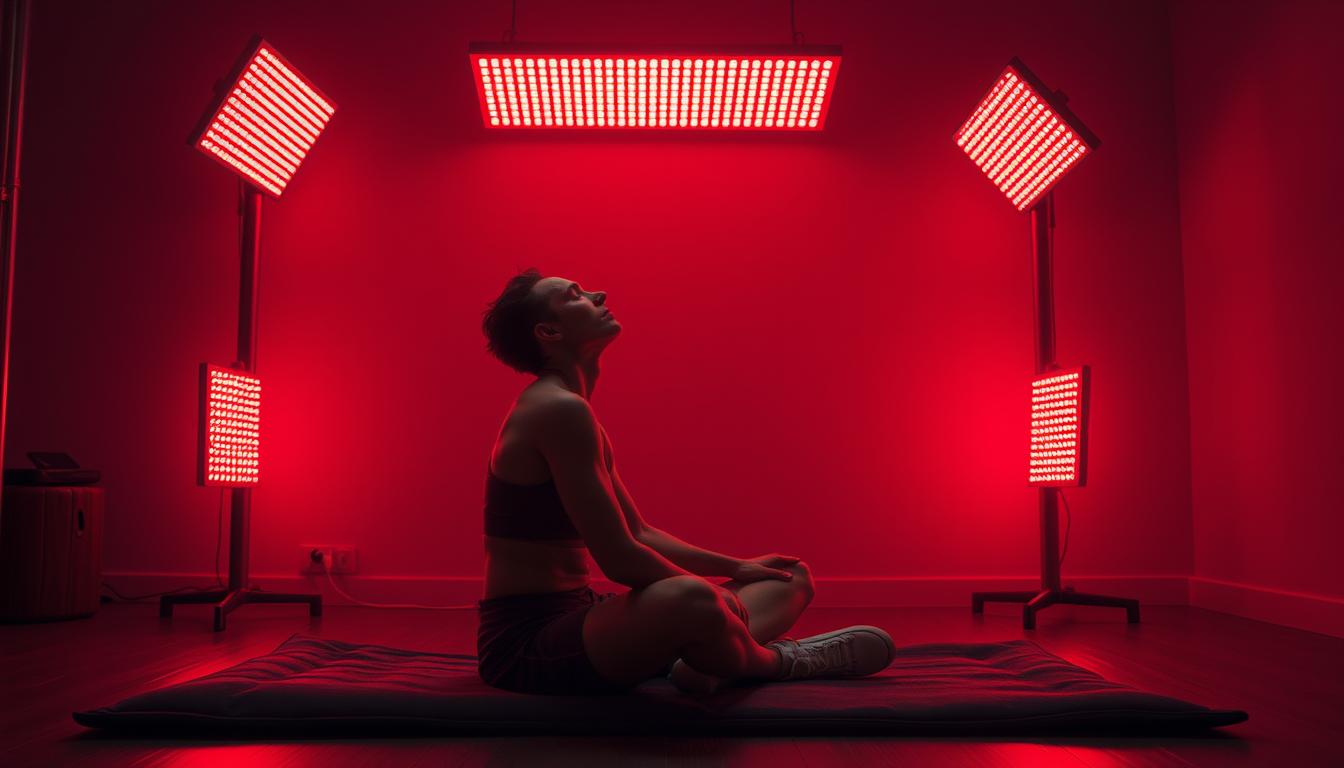
Imagine a simple routine that speeds up healing and sharpens focus before games. The Athlete’s Secret combines red light therapy with mental rehearsal. It’s a practical way to recover faster and perform better.
This guide is for athletes and coaches. It uses a Pre-Game Prep framework. You’ll learn how to use red light therapy devices and mental rehearsal. This combo helps repair muscles, reduce inflammation, and get ready for peak performance.
You’ll find science-backed explanations and safety tips. There’s also a 20-minute guided script. Plus, tips for personalizing the routine for different sports, common mistakes to avoid, and other recovery strategies like nutrition, sleep, and breathwork.
In the United States, you can find devices from Joovv, Red Light Rising, and MitoRed. Apps like Calm and Headspace offer guided sessions that go well with mental rehearsal. Always check with local medical professionals or your team’s sports medicine staff if you have injuries or persistent symptoms.
This article focuses on what matters most to you: faster recovery, better performance, and a stronger mind-body connection. These are key for long-term success in sports.
Key Takeaways
- Combining red light therapy and mental rehearsal offers a practical route to faster recovery and performance enhancement.
- The guide uses a Pre-Game Prep approach to support muscle repair and reduce inflammation.
- You’ll get device and safety tips for consumer brands like Joovv, Red Light Rising, and MitoRed.
- A 20-minute guided script and personalization tips make the routine easy to apply across sports.
- Complementary strategies—nutrition, sleep, and breathwork—boost the mind-body benefits for athletic performance.
The Athlete’s Secret: Combining Red Light with Mental Rehearsal for Faster Recov
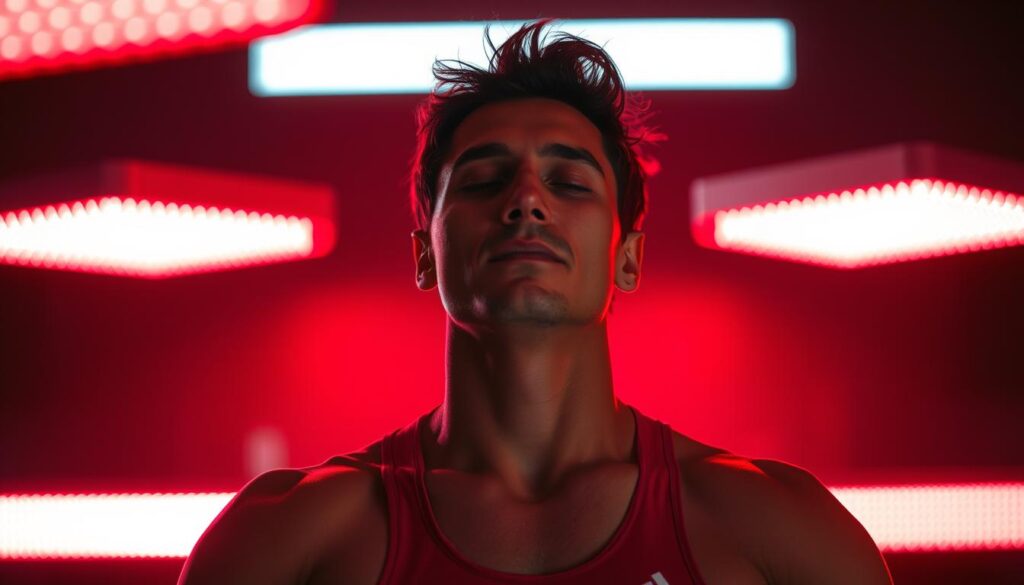
Many athletes are using two simple tools to get back to training faster. They combine red light therapy for tissue repair with mental rehearsal for the nervous system. This combo helps in smarter, faster recovery.
By learning this secret, you can add these methods to your routine. It’s a practical way to improve your recovery.
Why this combination matters for your recovery
Red light therapy boosts cellular energy and reduces inflammation. Mental rehearsal calms your nervous system and prepares your muscles. Together, they strengthen your mind-body connection, key for consistent performance.
Using these tools can lead to steadier training, fewer injuries, and better performance. They work best when combined with sleep and nutrition.
What to expect when you pair red light therapy with mental rehearsal
Right after using these tools, you’ll feel calm and focused. You might notice less soreness and better movement. Over time, athletes often recover faster and master skills more smoothly.
Remember, these are supportive strategies, not quick fixes. You’ll see gradual improvements in recovery if you’re consistent and combine them with good recovery habits.
How this fits into your Pre-Game Prep routine
Timing is key for these methods. Try 10–20 minute sessions after training or in the evening. Short mental rehearsal before games sharpens your focus without overwhelming you.
Choose calm imagery with red light therapy in the evening to keep your sleep quality. This way, you still get the benefits of red light and mental rehearsal in your Pre-Game Prep.
Understanding red light therapy for athletic recovery
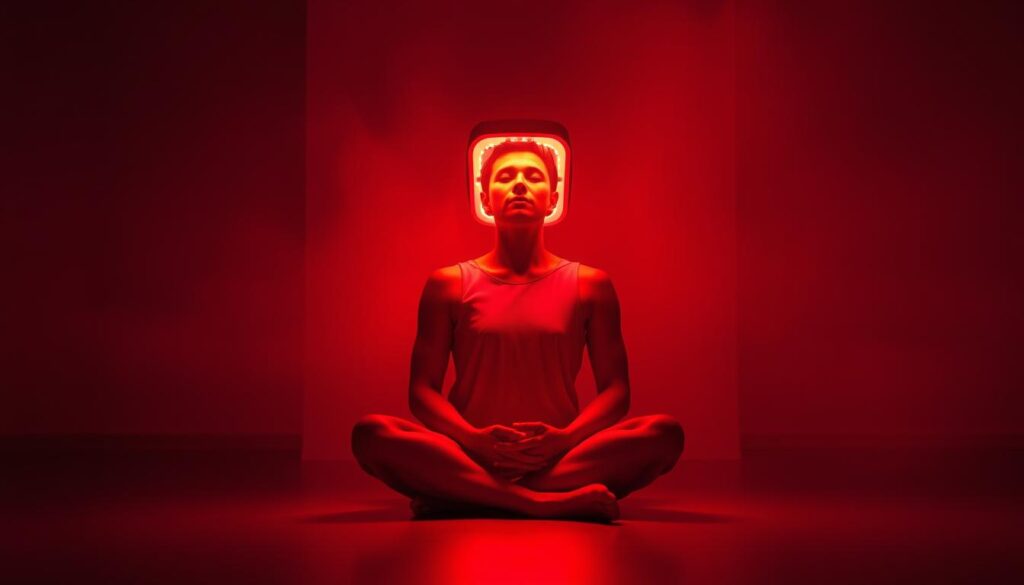
Red light therapy is a noninvasive way athletes use to recover faster and feel less sore. It’s also known as RLT, low-level laser therapy, or photobiomodulation. This method sends red and near-infrared light to cells to start healing and improve performance.
What red light therapy is and how it works biologically
RLT uses red and near-infrared light to reach tissues at different depths. These lights are absorbed by enzymes in cells. This absorption boosts ATP production and helps with healing.
These changes can improve blood flow and help the immune system fight inflammation. This means faster recovery and less downtime after intense workouts.
Evidence and studies supporting RLT for muscle repair and inflammation
Studies show RLT reduces muscle soreness and improves strength after hard workouts. Trials find it effective when used before or after exercise.
Research also shows it lowers inflammation and helps athletes get back to normal faster. But, results vary due to different doses and wavelengths used in studies.
This means we need more consistent dosing for top athletes. Still, the evidence supports RLT for muscle repair and reducing inflammation.
Safety, wavelengths, and device types to consider
RLT is safe if you follow the manufacturer’s guidelines. Don’t stare into high-power panels without eye protection. Always use goggles with panels and follow handheld and wearable instructions.
Choose the right wavelengths: red light (630–660 nm) for surface tissues, and NIR (800–850 nm) for deeper muscles. Many use wavelengths 630–850 nm for both.
Power density, energy dose, and session length affect results. Brands like Joovv, MitoRed, and PlatinumLED have different outputs. Always follow the device’s dosing charts to meet your goals.
Device types (panels, handhelds) meet different needs. Panels are good for full-body recovery. Handhelds target specific muscles or injuries. Wearable wraps are great for joints and repeated use. Panels are efficient for general recovery, while handhelds offer precision for muscle repair and inflammation control.
Understanding mental rehearsal and guided meditation for athletes
First, let’s understand what mental rehearsal and guided meditation do for athletes. These tools help train the brain and calm the body. They also sharpen focus without physical effort. Athletes use them for recovery, preparation, and improving skills.
Definition of mental rehearsal and its role in sports psychology
Mental rehearsal, or visualization, is imagining movements or recovery in your mind. It’s a key part of sports psychology. It helps with learning new skills, planning tactics, and boosting confidence.
Imagine a serve, a sprint start, or even healing your body. Repeating these images strengthens your brain’s pathways. Coaches at all levels use it to reduce anxiety and improve timing.
How guided meditation supports motor learning and stress reduction
Guided meditation gives structure to your mental rehearsal. A script helps focus on sensory details and body sensations. This makes your mental images clear and specific.
It also helps with motor learning by using the same brain areas as actual movement. Breathwork and body scans in meditation lower stress and cortisol. This helps with recovery and reduces stress between intense workouts.
Research on mental rehearsal improving performance and recovery
Studies show mental rehearsal can improve accuracy, reaction time, and confidence. It also helps athletes feel less tired and recover faster after injuries. This is especially true when used with physical training.
For the best results, keep sessions focused on your sport and repeat them. Start simple and add details. Use biofeedback like heart-rate variability to track progress.
How combining RLT and mental rehearsal creates a mind-body synergy
Pairing red light therapy with mental rehearsal taps into two systems. RLT boosts cell function and reduces inflammation. Mental rehearsal lowers stress and sharpens motor skills. Together, they support sports recovery and improve athletic performance.
Physiological pathways where RLT and mental rehearsal may interact
Red light therapy increases muscle energy and blood flow. Mental rehearsal enhances motor skills and balances the nervous system. This combination makes tissues more responsive to neural signals.
Neural priming and the potential for enhanced recovery outcomes
Mental rehearsal during RLT creates a window for neural priming. This makes planned movements stronger. It also speeds up learning and recovery, reducing injury risk.
Real-world examples from athletes and coaches
Strength coaches and physiotherapists use this combo in recovery rooms. Athletes practice perfect technique while getting RLT. Endurance athletes use it to reduce soreness and improve sleep.
- Combined therapy enhances local repair and systemic readiness for training.
- Neural priming during RLT may translate imagery into more effective motor retraining.
- Applied consistently, this approach supports faster recovery and better sports recovery outcomes.
Setting up your environment for combined sessions
Find a quiet spot for relaxation and focus. A recovery room, bedroom, garage gym, or training center area works great. Make it distraction-free by turning off your phone, dimming lights, and telling others you’re busy.
Choosing the right location and minimizing distractions
Choose a consistent spot for your RLT setup. This helps your body get used to the recovery cue. Keep the area clean and use a door sign or headset to avoid interruptions. Noise-cancelling headphones can also help you stay focused.
Lighting, device placement, and session timing for safety and effectiveness
Position the panel or handheld as the manufacturer suggests. Handhelds usually work best 6–12 inches away, while panels are 12–24 inches. Choose the right red and near-infrared settings for the tissue you’re targeting.
Run sessions for 10–20 minutes. Align your mental rehearsal with the steady-state part of the exposure. Avoid stimulating visuals before sleep. Always wear protective eyewear and secure panels to avoid risks.
Comfort, posture, and equipment to enhance focus
Relax in a comfortable posture that supports your spine. Use pillows in a recliner, mat, or chair to ease muscle tension. A small timer and noise-cancelling headphones help you stay on track.
If the device gets hot, use a thin towel as a barrier. Follow the manual’s skin-care advice. Make this part of your Pre-Game Prep routine to improve focus over time.
Step-by-step how-to: Guided mental rehearsal during a red light session
Pairing red light therapy with guided mental rehearsal can speed up recovery and improve skills. Begin in a calm space, with your device safely placed, and a clear goal in mind. Follow these steps to prepare your body and mind, use a 20-minute guided script, and adjust the session length to fit your schedule.
Preparing your body and mind
Drink water and do a quick cool-down after your workout. Avoid heavy meals before your session if they make you feel tired. Start with a 2–3 minute breathing exercise like box breathing to calm your heart rate and focus your mind.
Set a clear goal for your session. Decide if you want to focus on healing and relaxation or on improving your motor skills and confidence. A quick checklist can help: make sure your device is on the right setting, set a timer, silence your phone, and choose a comfortable position.
A sample 20-minute guided script
Minute 0–2: Get comfortable and focus on your breathing. Feel the ground beneath you and let your body relax.
Minute 2–6: Do a gentle body scan. Pay attention to the muscles you want to work on and notice any changes with each breath.
Minute 6–12: Use healing visualization. Imagine a warm light healing your damaged tissues, improving blood flow, and helping cells repair. See swelling go down and your muscles mend.
Minute 12–16: Focus on motor rehearsal. Imagine yourself performing key movements slowly and vividly. Feel the muscles working, joints aligning, and movements safe and controlled.
Minute 16–18: Boost your confidence with affirmations. Repeat phrases like, “My muscles repair quickly,” and “I move with control and power.”
Minute 18–20: Ground and integrate. Slow your breathing, see your body and technique come together, and set a goal for your next workout or competition.
Use first or second person in your language to keep it engaging. Make your imagery fit your sport and use different senses like touch, sound, and tension.
How to progress or shorten sessions
For a shorter 8–12 minute session, shorten the script. Start with quick settling, a brief body scan, one focused movement rehearsal, and a short affirmation sequence.
To make sessions longer, add more detail to your imagery or include progressive muscle relaxation and HRV biofeedback. Aim for 3–5 sessions a week; daily use is good for quick recovery or before games.
| Session Length | Core Focus | Structure | When to Use |
|---|---|---|---|
| 8–12 minutes | Quick recovery or technique tune-up | Settle (1–2 min), brief body scan (2 min), single movement rehearsal (4–6 min), affirmation (1 min) | Busy days, between workouts, or short pre-game prep |
| 20 minutes | Balanced healing and motor rehearsal | Full settling, body scan, healing visualization, motor rehearsal, confidence, grounding | Regular recovery sessions and daily skill practice |
| 30+ minutes | Deep repair and detailed imagery | Extended visualization, progressive muscle relaxation, multisensory motor rehearsal, biofeedback pairing | Post-injury recovery or intensive mental skills days |
Personalizing protocols for your sport and recovery goals
You need a plan that fits your sport, your body, and your goals. Start by defining what recovery looks like for you. Use clear performance metrics and simple notes so you can refine routines with data.
For endurance athletes, focus on steady pacing, efficient breathing, and keeping form when tired. Use short affirmations to help you stay focused and recover well. Imagine long climbs, even splits, and smooth cadence.
Power athletes should practice explosive moves, quick force production, and tight control. Use crisp phrases to boost your neural drive and safe power output. Picture yourself doing clean lifts, short sprints, or maximal pushes with precision.
Team-sport players can mix tactical thinking into their mental practice. Practice communication cues, situational reads, and transitions. Add targeted RLT dosing after heavy sessions to recover faster between games.
Adjust RLT dosing based on injury type and training load. For superficial soft-tissue strains, use shorter, more frequent sessions like 8–12 minutes daily. Deeper muscle issues might need 10–20 minutes of near-infrared and device guidance for energy per area (J/cm2).
When training gets harder, schedule recovery sessions three to five times a week. During tapers or acute rehab, work with your physical therapist or coach on RLT dosing. Always follow manufacturer guidelines and clinical protocols when available.
Good recovery tracking mixes objective tests with how you feel. Track vertical jump, sprint times, strength, range of motion, and HRV trends. Also, rate soreness, sleep quality, readiness, and mood.
Keep a recovery journal with device, wavelength, duration, RLT dosing, and mental rehearsal notes. Rate vividness from 1 to 5 and note any changes in soreness and mobility. Use this data to improve your approach.
If you don’t see progress after four to six weeks, adjust your approach or seek help. Use recovery tracking to spot plateaus early and guide adjustments in mental practice and light therapy.
| Athlete Type | Mental Focus | RLT Dosing Example | Key Performance Metrics |
|---|---|---|---|
| Endurance athletes | Efficient pacing, sustained form | 8–12 min daily; follow J/cm2 guidelines for superficial strains | VO2 metrics, pace consistency, HRV, perceived exertion |
| Power athletes | Explosive mechanics, neural drive | 10–20 min with NIR for deeper muscle work; 3–5x/week during heavy blocks | Max force, sprint time, vertical jump, recovery readiness |
| Team-sport athletes | Tactical reads, communication cues | 8–15 min post-game or post-practice; coordinate with rehab needs | Agility, decision speed, match recovery score, soreness VAS |
Common mistakes and how to avoid them
Pairing red light therapy with mental rehearsal can speed up recovery. But, small errors can reduce results. Be aware of common mistakes to make each session beneficial.
Device misuse often comes from not reading the manual or ignoring safety tips. Using a device too close for too long can cause skin irritation or eye damage. Always follow the manufacturer’s guidelines for irradiance and wear eye protection. For high-power devices, contact customer support or a clinician to avoid using the wrong wavelengths.
Incorrect wavelengths can make sessions less effective if the light can’t reach the muscle depth you need. Use near-infrared (around 800–850 nm) for deeper tissues and 630–660 nm for superficial work. If unsure, check the device specs and ask a licensed therapist before increasing exposure times.
Unfocused imagery reduces the benefits of mental rehearsal if your practice is vague or passive. Avoid multitasking during sessions. Use multisensory cues like feeling tension, hearing your breath, and visualizing precise motion. Practice in first person and rate your imagery vividness after each session.
Guided audio scripts, sport-specific cues, and video-based rehearsal can improve mental scenes. Short, concrete scripts are better than long, abstract ones. Slow-motion rehearsal helps embed accurate motor patterns, while normal-speed runs build timing and rhythm.
Timing errors occur when your mental rehearsal and RLT goals don’t align. Don’t run high-arousal performance imagery before sleep during evening RLT meant for restorative effects. Swap vivid competitive drills for calming restorative imagery in those sessions.
Avoid relying only on RLT plus mental rehearsal for severe injuries. Combine these tools with physical therapy, medical oversight, and coach guidance. Intense mental rehearsal that spikes sympathetic drive can counteract RLT aimed at relaxation. Match the session’s tone to your goal: activation for pre-game, calming for recovery.
Use a simple checklist: confirm device distance and wavelength, set session tone, use vivid, multisensory imagery, protect your eyes, and log how each session felt. This routine helps avoid common mistakes and keeps your progress steady.
Supplemental strategies to amplify recovery and performance
Using red light and mental rehearsal is best when you add simple habits. Start with nutrition and sleep. Eat foods that help repair, like lean protein and omega-3s. Have carbs after hard workouts to help muscles rebuild.
Getting enough sleep is key. Aim for 7–9 hours each night. An evening red light session with calming thoughts can help you sleep faster and better. Stick to a bedtime routine, keep your room cool, and use mental rehearsal to aid recovery.
Active recovery is important. Include light exercises, mobility drills, foam rolling, and contrast baths. These activities help your body use red light better. Mental rehearsal keeps your nervous system ready for repair.
Breathwork helps control stress. Try diaphragmatic breathing or box breathing before or during cool-downs. It lowers your heart rate and improves focus for visualization.
Progressive muscle relaxation works well with red light. Tense and release muscles slowly under red light. This makes your body more open to repair signals.
Use tools to track your progress. Guided audio, VR, and HRV devices help you stay on track. Biofeedback shows how well you’re reducing stress.
Know when to seek professional help. If you have injuries, pain, or need phototherapy, see a doctor first. A sports psychologist can help with scripts for anxiety and motivation.
If unsure about device use or health issues, talk to experts. Small changes from professionals can make your routine safer and more effective.
Conclusion
You now know the athlete’s secret. It’s about using red light therapy and mental rehearsal together. This combo helps you recover faster.
Red light therapy fixes cells, while mental rehearsal sharpens your mind. Together, they make you feel less sore and ready for action.
For a good start, pick a red light therapy device that’s safe. Set up a quiet space for your sessions. Try a 20-minute script or a shorter one on busy days.
Make your routine fit your sport. Keep track of your sleep, food, and recovery. Over time, you’ll get better at using these tools for top performance.
Remember, red light therapy and mental rehearsal are just tools. They work best with good sleep, healthy food, and physical therapy when needed. Always use devices wisely and talk to experts for serious issues.
Use these sessions before games to see how they help. Watch your progress and tweak your routine as you go. With regular practice, you’ll unlock the secret to faster recovery and better sports performance.