Chronic pain doesn’t have to control your life anymore. If you’ve tried everything and feel stuck, there’s a powerful solution waiting for you.
Combining two natural approaches can create something extraordinary. Pairing red light therapy pain relief with mindfulness practices leads to amazing results. Your body gets to heal on multiple levels at once.
Think of it like driving a car. Pressing the accelerator won’t get you far if the brake is on. Stress acts like that brake, slowing down your healing. Even the best treatments struggle when your mind and body are at odds.
This synergistic therapy approach tackles both sides. It reduces cellular inflammation and calms your nervous system. The result? Your body enters an optimal state for recovery.
In this article, you’ll learn how these two methods work together. We’ll dive into the science, share practical insights, and explain why this combination might be the missing piece in your pain management puzzle.
Key Takeaways
- Combining these two natural therapies creates results greater than using either one alone
- Stress can block even the most powerful treatments from working effectively
- This dual approach addresses both physical inflammation and psychological factors simultaneously
- Cellular healing improves when your nervous system is in a relaxed state
- Understanding the science behind this combination helps you maximize your relief
- Natural pain management becomes more effective when mind and body work together
Understanding the Pain-Inflammation Connection
Chronic pain isn’t just about damaged tissues—it’s about molecular messengers gone rogue. To understand what’s happening inside your body, you need to know about inflammatory cytokines. These tiny proteins act as your body’s communication network.
These molecules don’t just signal pain. They actively create and sustain it through complex biological mechanisms. This changes everything about chronic pain treatment.
The Role of Inflammatory Cytokines in Chronic Pain
Inflammatory cytokines are chemical messengers that coordinate your body’s response to injury or threat. When everything works correctly, they help you heal. But when this system malfunctions, they become the architects of persistent suffering.
Two specific cytokines deserve your attention: interleukin-6 (IL-6) and tumor necrosis factor-alpha (TNF-α). These are the primary troublemakers in chronic pain conditions. They don’t work alone—they recruit other inflammatory molecules and amplify pain signals throughout your nervous system.
Your pain receptors become increasingly sensitive to these chemical signals. Over time, even minor stimuli can trigger disproportionate pain responses. This process, called central sensitization, explains why chronic pain often feels worse than the original injury would suggest.
How IL-6 and TNF-α Perpetuate Pain Signals
IL-6 and TNF-α function as pain amplifiers at multiple levels of your nervous system. When tissues experience stress or damage, these inflammatory cytokines flood the affected area. They bind to receptors on nerve cells, directly increasing their sensitivity to pain signals.
But their influence extends far beyond the injury site. These molecules travel through your bloodstream and cross into your central nervous system. Once there, they modify how your brain and spinal cord process pain information.
TNF-α has a particular effect. It reduces the effectiveness of your body’s natural pain-blocking systems. At the same time, IL-6 enhances the production of other pro-inflammatory substances, creating a cascade effect that spreads inflammation throughout your body.
The Cycle of Inflammation and Tissue Damage
Inflammatory cytokines don’t just signal existing damage—they actively create more of it. This creates a vicious cycle that can persist long after the initial injury has healed.
When IL-6 and TNF-α accumulate in your tissues, they trigger the release of destructive enzymes. These enzymes break down healthy tissue, causing micro-injuries. Your body interprets these new injuries as threats, releasing even more inflammatory cytokines in response.
Each cycle reinforces the next. The inflammation causes tissue damage, which triggers more inflammation, which causes more damage. This self-perpetuating loop explains why chronic pain can last for months or years without any obvious ongoing injury.
| Inflammatory Cytokine | Primary Pain Mechanism | Secondary Effects | Duration of Action |
|---|---|---|---|
| IL-6 (Interleukin-6) | Sensitizes nerve endings and amplifies pain signal transmission | Promotes production of additional inflammatory molecules and disrupts tissue repair | Hours to days, can become chronically elevated |
| TNF-α (Tumor Necrosis Factor-alpha) | Directly activates pain receptors and reduces natural pain inhibition | Increases blood vessel permeability and recruits immune cells to injury site | Minutes to hours, rapid signaling cascades |
| Combined IL-6 + TNF-α | Synergistic amplification creating hyperalgesia (heightened pain sensitivity) | Establishes chronic inflammation state and central nervous system sensitization | Can persist indefinitely without intervention |
Why Traditional Pain Management Often Falls Short
Most conventional approaches to chronic pain treatment focus on blocking pain signals. Pain medications, whether over-the-counter or prescription, work by interrupting how your brain perceives discomfort. This creates temporary relief without changing the underlying inflammatory process.
Anti-inflammatory drugs do target inflammation, but they come with significant limitations. Long-term use carries risks including gastrointestinal problems, cardiovascular issues, and kidney damage. More importantly, they suppress inflammation systemwide, not addressing the specific cytokine imbalances driving your pain.
Physical therapy and other rehabilitative approaches offer more lasting benefits. Yet, they work slowly and can be less effective when high levels of inflammatory cytokines continue circulating in your system. The inflammation actively works against the healing process these therapies are trying to promote.
Symptom Treatment Versus Root Cause Resolution
The fundamental problem with traditional chronic pain treatment is its focus on symptoms. Imagine trying to dry your floor while a pipe continues leaking water. You might make temporary progress, but you’ll never solve the problem until you fix the pipe.
Pain medications are like mopping the floor. They address what you’re experiencing without stopping the source. The IL-6 and TNF-α continue their destructive work, maintaining the cycle of inflammation and tissue damage even when you don’t feel it as intensely.
This approach leads to dependency on medications that provide diminishing returns. Your body develops tolerance, requiring higher doses for the same effect. The underlying inflammatory process continues unabated, often worsening over time.
A truly effective approach must reduce the production and activity of inflammatory cytokines themselves. This means targeting the molecular conversation that creates and sustains chronic pain. Only by addressing IL-6, TNF-α, and their inflammatory partners can you break the cycle that keeps you trapped in persistent discomfort.
The good news? Emerging approaches like red light therapy directly influence these cytokine levels. But as you’ll discover in the following sections, even these powerful tools work best when combined with strategies that address the stress-inflammation connection at multiple levels.
What Is Red Light Therapy and How Does It Work?
Light has real power, thanks to biology. Red light therapy uses special light to help your body heal. It’s like turning on a switch that makes your body fix itself.
Unlike harmful UV rays, red light therapy works with your body. It shines light on your skin that goes deep inside. Your cells then get the signal to make more energy and fight off inflammation.
For over 50 years, scientists have studied this. They found that certain lights can change how cells work. This leads to faster healing and less pain.
The Science of Photobiomodulation
Photobiomodulation (PBM) is when light changes how your body works. It’s called “photo” for light, “bio” for life, and “modulation” for change. It’s how light changes living tissue.
The benefits of PBM go deep. When light hits your cells, it starts a chain of reactions. These reactions affect energy and inflammation. Thousands of studies have shown this.
Your cells always listen to their surroundings. Light is a key signal in nature. Just like plants use sunlight, your cells can use light to act.
This isn’t new—it’s basic biology. Your body has molecules that catch light. When the right light hits, these molecules start healing processes.
The main difference between sunlight and red light therapy is precision. Red light therapy gives only the good wavelengths. This lets your cells get the most healing.
Cellular Absorption and Response Mechanisms
Cells absorb light fast, but the effects last long. When red or near-infrared light hits your cells, it goes to a molecule in your mitochondria. This molecule boosts energy production.
This boost means your cells have more energy. They can repair themselves, fight inflammation, and stay healthy. Light also makes nitric oxide, improving blood flow and oxygen delivery.
Wavelength Specifications: 630-850nm Explained
Not all light is good for therapy. The spectrum has many wavelengths, but only a few are useful. The good range is 630 to 850 nanometers, covering both red and near-infrared light.
This range works well because it goes deep and is absorbed well. Light below 630nm doesn’t go deep enough, and light above 850nm gets too hot.
Red Light Spectrum: 630-680nm
Visible red light in this range looks bright red. It goes about half an inch deep into your skin.
This depth makes it great for:
- Surface-level skin issues and wound healing
- Reducing inflammation in joints near the skin
- Stimulating collagen in skin layers
- Improving blood flow in small vessels
This range is best for treating arthritis in hands and feet, small injuries, and skin inflammation. You’ll see improvements quickly because it works near the surface.
Near-Infrared Spectrum: 810-850nm
Near-infrared light is invisible but feels warm. It goes up to 2-3 inches deep, making it great for internal issues.
This range is best for:
- Deep muscle and connective tissue
- Major joints like knees and hips
- Bone tissue and marrow
- Internal organs (in some cases)
Near-infrared is perfect for deep-seated pain like back pain and muscle injuries. It reaches the pain source, not just the surface.
Best devices use both ranges for full benefits. This way, they help both the surface and deep tissues.
Cellular-Level Mechanisms of Action
Understanding how light works at a tiny level explains its benefits. Light triggers a chain of positive effects in your body.
First, light boosts mitochondrial activity. This means your cells make more energy to repair and function. This energy boost is key to healing.
Second, light reduces oxidative stress. It balances reactive oxygen species in cells. Too much ROS causes harm, but the right amount helps healing.
Third, it modulates inflammation. It lowers pro-inflammatory signals and raises anti-inflammatory ones. This helps your body heal faster.
Fourth, it improves cell communication. Light makes cells more open to nutrients and signals. This leads to better healing responses.
Lastly, it stimulates growth factors for tissue repair. This includes new blood vessel and nerve growth. All these mechanisms work together to fight pain and inflammation.
Photobiomodulation doesn’t force your body to do unnatural things. It just gives it the signals and energy it needs to heal. You’re optimizing your body’s natural abilities.
Red Light Therapy’s Impact on ATP Production and Cellular Repair
Red light therapy boosts your body’s energy, like a turbocharger for your cells. It’s not just about feeling more energetic. It gives damaged tissues the energy to repair themselves.
The link between ATP production and recovery speed is clear. Without enough energy, healing slows or stops. Red light therapy fixes this by targeting energy-making structures in cells.
Mitochondrial Targeting for Enhanced Energy
Your cells have tiny powerhouses called mitochondria. They turn nutrients into adenosine triphosphate (ATP), the energy your cells need. Think of ATP as the money your cells use for repairs and daily tasks.
Red and near-infrared light reaches these mitochondria deep in your tissues. This precise targeting makes cellular repair therapy effective. Unlike medicines, photobiomodulation gives energy right where your cells need it.
When mitochondria absorb these light wavelengths, they make more energy. This boost is not temporary. It improves cell function and repair over time.
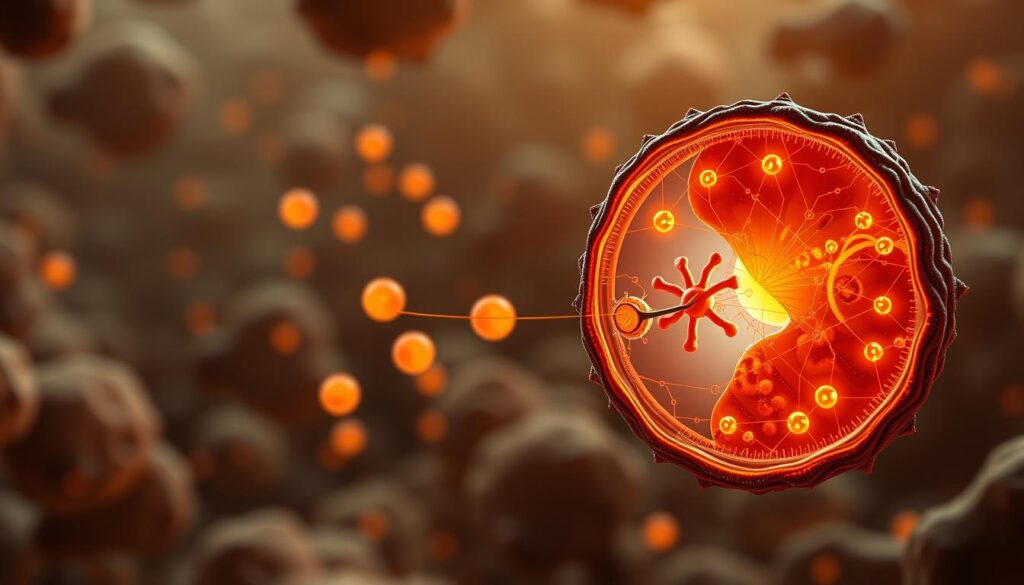
The magic starts with an enzyme called cytochrome c oxidase. It’s in your mitochondria and key to making ATP. Normally, a molecule called nitric oxide slows down energy production.
Red light photons interact with cytochrome c oxidase in a special way. They make nitric oxide release, letting energy production speed up. It’s like cleaning clogged fuel injectors in an engine, making everything run better.
This interaction with cytochrome c oxidase changes how mitochondria work. Oxygen use goes up, electron transport speeds up, and energy production gets a boost.
The Energy Production Cascade
Once cytochrome c oxidase is activated, good things happen in your cells. The energy-making process works better, making more ATP from the same resources. Studies show treated tissues can make 150-200% more ATP after red light exposure.
This big ATP boost helps cells in many ways. It improves energy use, calcium handling, and stress management. Your cells have more energy to repair and grow.
The benefits don’t stop at energy production. More ATP means cells can start growth and repair processes that were dormant before. This is because cells have enough energy to do these tasks.
How Increased ATP Accelerates Healing
With more ATP, cells can fix the backlog of repair work from injuries or chronic inflammation. Every repair process needs a lot of energy. Without enough ATP, these processes slow down or stop.
Protein synthesis is very energy-intensive. Your body needs to make new proteins to fix damaged structures and create important molecules. With more ATP, cells can make proteins faster and more efficiently.
Damaged cellular membranes need quick attention to keep cells intact. The process of repairing and replacing these membranes needs constant energy. With more ATP from therapy, cells can fix membranes fast and prevent further damage.
Cellular Repair and Regeneration Processes
The repair processes activated by more ATP touch many important systems. Autophagy, your cells’ recycling program, needs a lot of energy. With more ATP, this process gets faster, removing harmful debris that slows healing.
Antioxidant production is another energy-dependent process that protects cells during recovery. Your cells make molecules like glutathione and superoxide dismutase to fight off free radicals. These protective molecules need ATP to be made, making energy key for managing stress.
DNA repair also needs enough cellular energy. When tissues get injured, DNA damage often happens too. ATP-fueled repair enzymes can fix these genetic errors, preventing mutations and helping healthy tissue growth.
The effects of all these ATP-dependent processes explain why red light therapy speeds up healing. It addresses the energy deficit that slows recovery, giving cells the resources they need for efficient repair.
The Anti-Inflammatory Effects of Photobiomodulation
Photobiomodulation does more than just energize cells. It changes how your body handles inflammation. The ATP boost is impressive, but the anti-inflammatory therapy effects of red light are even more important for those with chronic pain. This makes photobiomodulation great at tackling pain’s root causes, not just covering up symptoms.
Red light goes deep into your tissues, causing changes that lower inflammation. These changes happen at a molecular level. They affect the signals that tell your body to stay in a painful, inflamed state.
Reducing Pro-Inflammatory Cytokines: IL-6 and TNF-α
Red light therapy targets those inflammatory messengers that make pain worse. Studies show it cuts down IL-6 and TNF-α, the main cytokines behind chronic inflammation.
Direct Suppression of Inflammatory Pathways
The way cytokine reduction works is quite interesting. As ATP production goes up and cells start working better, they move away from being stressed and inflamed. This shift directly blocks the pathways that keep IL-6 and TNF-α going strong.
It’s like turning down the volume on an alarm system. The stress signals that cause inflammation get quieter. This lets your body get back to a balanced state. Well-energized cells don’t see the same threats as tired, struggling cells do.
Quantifiable Reductions in Inflammatory Markers
Studies show real drops in inflammatory markers after regular red light therapy. These changes are big and lead to less pain and better function.
Blood tests can show these drops in IL-6 and TNF-α levels. Patients often feel better before lab results confirm the cytokine reduction. But both show the same thing: less inflammation.
Nitric Oxide Production and Improved Circulation
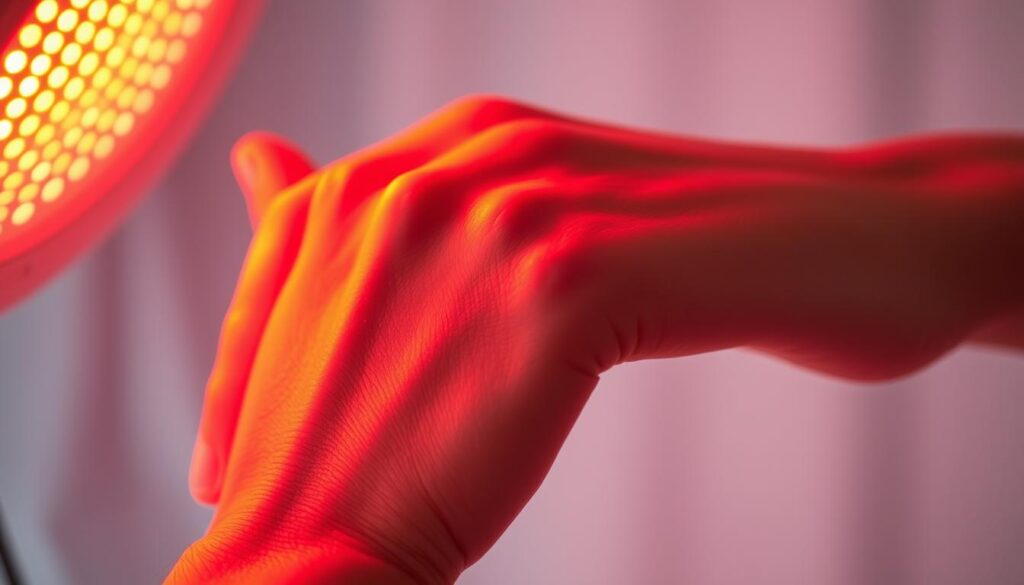
Photobiomodulation does more than just block inflammatory signals. It also boosts nitric oxide release. This molecule is key in your cardiovascular system, helping to resolve inflammation naturally.
Nitric oxide production is another way anti-inflammatory therapy works. While cytokine suppression turns down inflammation, better circulation helps clear out inflammatory waste and repair tissues.
Vasodilation and Nutrient Delivery
When photobiomodulation triggers nitric oxide release, your blood vessels widen. This vasodilation lets more blood flow, bringing oxygen and nutrients to damaged, inflamed tissues.
At the same time, better circulation removes waste and debris. This reduces swelling and helps your immune system clear out inflammation without drugs.
This mix of nutrient delivery and waste removal creates the perfect healing environment. Your tissues get what they need to repair while getting rid of the biochemical clutter that keeps inflammation going.
Evidence from the 2017 Photomedicine and Laser Surgery Review
There’s a lot of scientific proof for photobiomodulation’s anti-inflammatory effects. A 2017 review in Photomedicine and Laser Surgery looked at many clinical trials. It showed photobiomodulation’s effectiveness.
Clinical Efficacy for Musculoskeletal Pain
The review found photobiomodulation works well for many musculoskeletal pain conditions. Patients with arthritis, tendinitis, and chronic back pain all saw improvements. Pain scores went down and function got better across different conditions.
Researchers said the benefits come from photobiomodulation’s strong anti-inflammatory effects. The cytokine reduction and improved circulation we talked about aren’t just theories. They lead to real, measurable improvements in patients’ lives.
This scientific backing shows photobiomodulation speeds up healing. It boosts cellular energy while reducing inflammation. This creates the best conditions for your body to heal naturally and effectively.
The Hidden Saboteur: How Stress Undermines Pain Relief
There’s a hidden factor that could be canceling out the benefits of your pain relief treatments. Most people don’t even realize it’s happening. That factor is chronic stress. While you might think stress is purely psychological, it creates powerful physical changes in your body. These changes directly interfere with healing and inflammation reduction.
Stress doesn’t just make you feel worse—it makes your pain worse at the cellular level. Understanding this connection is critical if you want to maximize the benefits of red light therapy and achieve lasting relief.

The Fight-or-Flight Response and Cortisol Release
When you experience stress—whether from work deadlines, relationship conflicts, financial worries, or even the frustration of dealing with chronic pain—your body activates an ancient survival mechanism. This fight-or-flight response was designed to help our ancestors escape from predators and immediate dangers.
Today, your body can’t tell the difference between a lion chasing you and a stressful email from your boss. The response is the same: your sympathetic nervous system kicks into high gear, preparing you for action.
Sympathetic Nervous System Dominance
The sympathetic nervous system controls your body’s automatic responses to perceived threats. When activated, it triggers a cascade of physiological changes. Your heart rate increases, your breathing becomes shallow and rapid, and your muscles tense up.
Most importantly, your adrenal glands release stress hormones into your bloodstream. The primary stress hormone is cortisol, often called the “stress hormone.”
In short bursts, cortisol is actually helpful. It provides quick energy and sharpens your focus to deal with immediate challenges. But modern life rarely gives us those short, manageable stress bursts.
Chronic Stress and Sustained Cortisol Elevation
Here’s where the problem becomes serious. Most Americans live in a state of chronic stress that never fully shuts off. Your body wasn’t designed to maintain high cortisol levels day after day, week after week.
When cortisol remains elevated for extended periods, it stops being protective and starts becoming destructive. This sustained elevation creates a biochemical environment that actively works against healing and pain relief.
| Stress Duration | Cortisol Pattern | Effect on Body | Impact on Pain |
|---|---|---|---|
| Acute (minutes to hours) | Sharp spike, then returns to baseline | Protective, enhances focus and energy | Minimal negative impact |
| Episodic (days to weeks) | Repeated spikes with incomplete recovery | Begins disrupting normal function | Moderate inflammation increase |
| Chronic (months to years) | Persistently elevated baseline | Actively damages tissues and systems | Significant inflammation and pain amplification |
Understanding the relationship between cortisol inflammation is essential for anyone dealing with chronic pain. Without addressing this connection, stress reduction techniques become just another tool you’re missing.
Stress-Induced Inflammatory Cascade
Now we arrive at the critical insight that most pain sufferers never learn. Chronically elevated cortisol doesn’t just make you feel stressed—it actively increases inflammation throughout your body.
This creates a biochemical contradiction that sabotages your healing efforts. You might be using red light therapy to reduce inflammatory markers, but stress is simultaneously ramping them back up.
How Cortisol Triggers IL-6 and TNF-α Production
Here’s the shocking truth: sustained cortisol elevation actually increases production of pro-inflammatory cytokines, including the exact same molecules that drive your pain. Specificially, chronic stress raises levels of IL-6 and TNF-α—the inflammatory markers we discussed in previous sections.
Research has shown that people under chronic stress have measurably higher levels of these inflammatory cytokines in their bloodstream. One study found that individuals experiencing chronic stress had IL-6 levels up to 47% higher than those in low-stress conditions.
Chronic psychological stress is associated with the body losing its ability to regulate the inflammatory response, which can promote the development and progression of disease.
This isn’t theoretical—it’s measurable, documented, and happening in your body right now if you’re under chronic stress. The cortisol inflammation connection creates a direct pathway from your mental state to your physical pain levels.
The Vicious Cycle of Stress and Pain
Perhaps the most frustrating aspect of this problem is that it creates a self-perpetuating cycle. Pain causes stress, stress increases inflammation, inflammation worsens pain, which causes more stress. It’s like being trapped on a merry-go-round you can’t escape.
Think about it: you wake up with pain, which frustrates and worries you. That stress releases cortisol. The cortisol increases IL-6 and TNF-α in your tissues. Those inflammatory cytokines amplify your pain signals. The increased pain makes you more stressed, and the cycle continues.
This is why stress reduction techniques aren’t just nice-to-have wellness practices—they’re essential components of effective pain management. Without breaking this cycle, you’re fighting an uphill battle.
It’s like trying to fill a bucket with a hole in the bottom. You might be diligently using red light therapy to reduce IL-6 and TNF-α, but if you’re simultaneously stressed, your body is actively producing more of these inflammatory markers. Stress acts as a physiological “brake” on healing, counteracting the benefits you’re working so hard to achieve.
The good news? Once you understand this mechanism, you can take specific steps to interrupt the cycle. Combining red light therapy with proven stress reduction techniques creates a synergistic effect that addresses pain from both directions—reducing inflammation while preventing stress from recreating it.
In the next section, we’ll explore exactly why red light therapy alone, despite its proven benefits, isn’t enough to overcome this stress-inflammation paradox. Understanding this limitation is the key to unlocking truly effective, lasting pain relief.
The Stress-Inflammation Paradox: Why RLT Alone Isn’t Enough
Your body has a biochemical contradiction that limits red light therapy’s pain relief. This paradox makes some people get inconsistent results, even with correct use. It’s about how your body gets two opposite signals at once.
Using red light therapy with chronic stress confuses your body. The light gives healing instructions, but stress sends conflicting messages. This mix-up hinders natural pain relief.
The issue isn’t with the therapy but the environment it’s used in. This is key to understanding why it doesn’t work as expected.
When Your Body Works Against Itself
Your body has complex chemical pathways for health and repair. These pathways work together under normal conditions.
But stress disrupts this harmony. It sends conflicting signals to cells, hindering healing.
Red light therapy boosts healing by reducing inflammation. It increases ATP and suppresses inflammatory markers.
But stress triggers cortisol release and boosts pro-inflammatory cytokines. This cancels out the therapy’s benefits.
Your body gets mixed signals. One says heal, the other says prepare for threat. This confusion reduces the therapy’s effectiveness.
The Biochemical Tug-of-War
This conflict is a biochemical tug-of-war. Neither side wins fully, limiting the therapy’s benefits.
This tug-of-war explains why inflammation reduction is often incomplete. You’re making progress but also working against yourself.
| Red Light Therapy Signals | Stress Response Signals | Net Result |
|---|---|---|
| Reduces IL-6 and TNF-α levels | Increases IL-6 and TNF-α production | Partial cytokine reduction only |
| Activates cellular repair mechanisms | Diverts energy to stress response | Slowed tissue healing |
| Enhances mitochondrial function | Creates oxidative stress | Diminished ATP benefits |
| Improves circulation through nitric oxide | Constricts blood vessels via cortisol | Limited nutrient delivery |
Stress Actively Counteracting RLT Benefits
Driving a car with one foot on the gas and the other on the brake is like using red light therapy with stress. You move forward, but slowly and with wasted energy.
The therapy is the gas pedal, speeding up healing. Stress is the brake, causing inflammation and blocking healing pathways.
You might feel some relief, but it’s not complete. Many blame the therapy, not realizing stress is the real issue.
Understanding this paradox is empowering. You don’t need a stronger therapy. You just need to manage stress to unlock the therapy’s full power.
Guided meditation is key in managing stress. It removes the brake, allowing the therapy to work better. This creates a powerful synergy between therapy and meditation.
Guided Meditation: The Missing Piece for Complete Pain Management
Managing pain isn’t just about what you apply to your body. It’s about the state your body is in when you apply it. Red light therapy works wonders at the cellular level. But there’s a powerful technique that creates the ideal internal environment for healing. That missing piece is guided meditation, and it transforms everything.
Think of it this way: red light therapy is like planting seeds in a garden. But if the soil is toxic with stress hormones, those seeds struggle to grow. Guided meditation prepares the soil, making it rich and receptive. Together, they create conditions where healing doesn’t just happen—it accelerates.
The connection between guided meditation inflammation reduction and pain relief goes far deeper than simple relaxation. We’re talking about fundamental shifts in how your body operates at every level.
Activating the Parasympathetic Nervous System
Your nervous system operates in two primary modes. Understanding this distinction changes everything about how you approach pain management. When you practice guided meditation, you’re doing something remarkable. You’re taking conscious control of an usually automatic system.
Parasympathetic activation is the technical term for switching your body into healing mode. This isn’t abstract—it’s a measurable biological shift with profound implications for pain and inflammation.
Shifting from Fight-or-Flight to Rest-and-Digest
Your sympathetic nervous system governs the fight-or-flight response we discussed earlier. It’s designed for short-term threats, not chronic activation. The parasympathetic system represents the opposite—it’s your body’s rest-and-digest mode.
When you engage in guided meditation, specific neural signals cascade through your body. Your vagus nerve—the longest cranial nerve in your body—becomes the superhighway for these calming messages. Within minutes, measurable changes begin.
Your heart rate slows to a more efficient rhythm. Blood pressure decreases as blood vessels relax. Breathing naturally deepens, delivering more oxygen to tissues that need it for repair.
Neurological Pathways of Relaxation
The science behind meditation’s effectiveness involves specific brain regions that directly influence your pain experience. The prefrontal cortex—your brain’s control center—becomes more active during meditation. This region sends inhibitory signals to the amygdala, your brain’s fear and stress center.
This neural conversation literally turns down the volume on stress signals. The result? Your brain stops flooding your body with stress hormones that amplify pain perception and trigger inflammation.
Research using brain imaging shows that experienced meditators have physically different brain structures. The areas responsible for emotional regulation and body awareness become thicker and more developed. Even beginners show measurable changes after just eight weeks of regular practice.
The Rest-and-Digest State Explained
The rest-and-digest state isn’t just about feeling calm. It’s a complete physiological shift that creates the optimal environment for healing. Understanding what happens in your body during this state reveals why guided meditation inflammation reduction is so powerful.
When your parasympathetic system takes over, your body prioritizes maintenance and repair over immediate survival. Resources that were diverted to muscles and stress responses become available for healing damaged tissues.
Physiological Changes During Deep Relaxation
The moment you enter deep relaxation during meditation, a cascade of beneficial changes unfolds. Your digestive system, which shuts down during stress, becomes active again. This matters more than you might think—proper digestion reduces systemic inflammation and supports immune function.
Blood flow patterns shift dramatically. During stress, blood concentrates in your limbs for quick action. During relaxation, circulation improves to your core organs and healing tissues. This enhanced blood flow carries oxygen, nutrients, and immune cells exactly where they’re needed.
Muscle tension releases throughout your body. Chronic muscle tightness contributes significantly to pain conditions, such as back, neck, and shoulder pain. As muscles relax, they stop compressing nerves and blood vessels, reducing pain signals.
Your breathing pattern changes automatically. Shallow chest breathing switches to deep belly breathing. This activates the diaphragm fully, which massages internal organs and stimulates the vagus nerve—creating a positive feedback loop of relaxation.
Hormonal Rebalancing Through Meditation
Perhaps the most significant benefit of guided meditation is its impact on your hormonal environment. Remember that cortisol—your primary stress hormone—directly stimulates inflammatory cytokine production. Meditation tackles this problem at its source.
Studies show that cortisol levels drop by 25-30% after a single meditation session. For regular practitioners, baseline cortisol levels remain lower throughout the day. This isn’t temporary relief—it’s a fundamental recalibration of your stress response system.
But cortisol isn’t the only hormone affected. Meditation increases production of feel-good neurotransmitters like serotonin and dopamine. These don’t just improve mood—they have direct anti-inflammatory and pain-modulating effects.
Growth hormone and melatonin production also increase during deep relaxation states. Growth hormone accelerates tissue repair and regeneration. Melatonin, beyond its sleep benefits, is a powerful antioxidant that protects cells from inflammatory damage.
The beauty of this approach lies in its accessibility and safety. You don’t need special equipment, expensive treatments, or pharmaceutical interventions. Guided meditation costs nothing, requires only quiet time, and produces zero negative side effects.
Instead, it delivers a package of additional benefits: improved sleep quality, better emotional regulation, enhanced mental clarity, and reduced anxiety. Each of these secondary benefits further supports your body’s natural healing capacity.
When you combine this hormonal rebalancing with red light therapy’s cellular mechanisms, something extraordinary happens. You’re simultaneously removing the factors that promote inflammation while amplifying the factors that resolve it. This is the synergy that transforms moderate pain relief into complete healing.
Scientific Evidence: Mindfulness-Based Stress Reduction and Inflammation
Researchers at Carnegie Mellon University found something amazing about meditation. They discovered that mindfulness pain management isn’t just mental. It also changes your body’s inflammation levels. This has changed how doctors see the link between meditation and healing.
The study showed that meditation programs can lower inflammatory markers. This isn’t just feeling better. It’s real, measurable changes in blood chemistry.
Carnegie Mellon Research on MBSR
Carnegie Mellon University did groundbreaking studies on Mindfulness-Based Stress Reduction (MBSR). They looked at real physical changes, not just feelings. Their findings proved what meditation practitioners had always said.
Study Design and Participant Outcomes
The study was well-designed. They split participants into two groups. One group did an eight-week MBSR program, and the other didn’t.
Those who meditated showed big drops in inflammatory markers. The results were the same for everyone, no matter their age or health.
Methodology and Measurement Protocols
The researchers used lab tests to measure inflammatory markers. They took blood samples before, during, and after the program. This let them see when changes started.
The study was double-blind. The people testing the blood didn’t know who was meditating. This made the results reliable and accepted by doctors.
Measurable Reductions in IL-6 Levels
IL-6 is a key inflammatory cytokine. High levels are linked to chronic pain and diseases. The study found that MBSR lowered IL-6 levels in meditators.
Statistical Significance of Inflammatory Marker Changes
The IL-6 reductions were real and significant. The study’s results were clear and showed real health improvements. A 20% drop in IL-6 is a big deal for health.
Other markers, like CRP, also went down. These changes are important for health.
Timeline for Observable Benefits
Results started showing up in 2-3 weeks. Cortisol levels began to drop early on. This set the stage for bigger changes.
By 6-8 weeks, inflammatory markers really started to drop. This shows that meditation makes lasting changes, not just temporary fixes.
| Timeline | Biomarker Changes | Clinical Significance | Practice Requirement |
|---|---|---|---|
| Week 2-3 | Cortisol reduction begins | Decreased stress response | 20 minutes daily |
| Week 4-5 | Initial IL-6 decreases | Early anti-inflammatory effects | 20-30 minutes daily |
| Week 6-8 | Significant inflammatory marker reduction | Measurable pain relief | 30 minutes daily |
| Week 12+ | Sustained low inflammatory baseline | Long-term health improvements | 20-30 minutes daily (maintenance) |
Long-Term Benefits of Regular Meditation Practice
Long-term studies showed amazing results. People who kept meditating saw their improvements last. This shows that mindfulness gets better with time.
Regular meditators had lower inflammatory markers even when not meditating. Their bodies seemed to adjust to a healthier state. This is a big change in how the body works.
Sustained Anti-Inflammatory Effects
Studies followed people for months and even years. Those who kept meditating had lower IL-6 levels. Stopping meditation made their levels go back up.
Experienced meditators had inflammatory levels like people 10-15 years younger. This suggests meditation can slow aging.
Meditation isn’t just a quick fix. It’s a lifestyle change that makes lasting changes in how your body handles inflammation. Adding it to treatments like red light therapy can lead to even more pain relief.
The Synergistic Effect: How Guided Meditation Unlocks Red Light Therapy
When you remove obstacles and add healing power, magic happens. This is why guided meditation and red light therapy together create amazing results. They work together in perfect harmony, creating a new healing environment.
The idea of synergistic healing means the total effect is greater than the parts. Using these therapies together multiplies their effectiveness. Meditation prepares your body for red light therapy, and the therapy reduces pain and stress, creating a positive cycle.
Think of your body as a garden where healing needs to grow. Meditation removes stress and inflammation, while red light therapy provides the nutrients. Together, they create an environment where healing flourishes.
Creating an Optimized Low-Inflammation Environment
Before red light therapy can work fully, your body needs to be in the right state. Meditation prepares your body by reducing stress and inflammation. This makes your body ready for healing.
Meditation does more than relax your mind. It stops the release of inflammatory compounds. Stress hormones like IL-6 and TNF-α cause inflammation.
Meditation interrupts this process before it starts. It activates your parasympathetic nervous system, reducing stress hormones. This means fewer inflammatory molecules in your bloodstream during red light therapy.
The timing is key. Without meditation, your body might keep releasing inflammatory compounds while red light therapy tries to reduce them. It’s like trying to empty a bathtub with the faucet on full blast.
Establishing Baseline Conditions for PBM Success
Photobiomodulation works best when your cells aren’t overwhelmed. Stress hormones can reduce the therapy’s effectiveness. Meditation helps your cells become more receptive to healing signals.
Meditation makes your cells ready for red light therapy. They become more responsive to healing signals. This means more photons are used for healing, not wasted.
Stressed cells don’t respond well to light therapy. By reducing stress first, your cells are ready to heal. This is because mitochondria function better when not stressed.
Removing the Brake While Pressing the Accelerator
Understanding combined therapy benefits is like driving a car. With meditation, you remove the brake of stress. Red light therapy then accelerates healing.
True healing acceleration comes from removing obstacles. This lets therapies work at their full strength.
Meditation stops the release of inflammatory compounds. Red light therapy then promotes healing. Together, they create a powerful healing environment.
Dual-Action Anti-Inflammatory Approach
This combination attacks inflammation from different angles. Meditation works from the top down, reducing inflammation signals. Red light therapy targets cells directly, reducing inflammation at the source.
Meditation reduces inflammation signals in your brain. Red light therapy targets cells, reducing inflammation locally. This dual approach is powerful.
| Therapeutic Aspect | Meditation Alone | Red Light Therapy Alone | Combined Approach |
|---|---|---|---|
| Inflammatory Reduction | 20-30% decrease in systemic markers | 25-35% decrease in local inflammation | 60-75% decrease in overall inflammation |
| Healing Speed | Moderate improvement through stress reduction | Significant improvement through cellular repair | Accelerated healing with optimal conditions |
| Pain Relief Duration | Short to moderate (2-4 hours) | Moderate to long (4-8 hours) | Extended relief (8-12+ hours) |
| Stress Management | Excellent nervous system regulation | Indirect through pain reduction | Comprehensive mind-body stress relief |
Complementary Mechanisms
Meditation and red light therapy use complementary mechanisms. They work together, not the same way. Meditation reduces stress, while red light therapy promotes healing.
Meditation doesn’t increase ATP production. That’s red light therapy’s job. Red light therapy doesn’t reduce stress hormones. Meditation does that.
Together, they work at full strength. You get the benefits of both therapies, creating a powerful healing environment.
Maximum Unobstructed PBM Efficacy
Meditation lets photobiomodulation work at its best. This is what red light therapy can do when barriers are removed.
How Meditation Amplifies Red Light Therapy Results
Meditation amplifies red light therapy in several ways. It increases blood flow and improves cellular receptivity. This means more effective healing.
Meditation also extends the benefits of red light therapy. The calm state you achieve continues to work for hours after treatment.
Stressed individuals need more photobiomodulation to see results. Meditation makes your body more sensitive to therapy, reducing the needed exposure time.
Exponential Benefits Versus Linear Effects
The math of synergy is fascinating. When therapies add together, you get linear effects. Meditation and red light therapy together create exponential benefits.
This means you can see 70-80% reduction in inflammation. The combined effect is much greater than simple addition.
People using both therapies together report better pain relief. Their results show the true power of therapeutic synergy.
This combination creates a positive feedback loop. Less stress means better therapy results. Better results mean less pain and stress. This cycle continues, building momentum toward healing.
Understanding this synergy changes pain management. You’re not just treating symptoms. You’re creating an ecosystem where healing happens naturally and sustainably.
The Biochemical Synergy: When 1+1 Equals 3
Combining meditation and red light therapy is truly magical. They attack inflammation from different angles at the same time. It’s not just doing two good things together. It’s creating a biochemical healing environment where each therapy boosts the other’s effect.
When meditation and red light therapy work together, they create a synergistic effect. This means the combined result is more than the sum of their individual benefits. You’re not getting 1+1=2; you’re getting 1+1=3.
Dual Reduction of Inflammatory Markers
This combination’s power is clear when you see how both therapies target the same inflammatory molecules. Your body produces inflammatory markers like IL-6 and TNF-α in response to pain and tissue damage. Both meditation and red light therapy reduce these markers, but in different ways.
Simultaneous Suppression from Two Directions
Meditation lowers inflammatory cytokines by reducing cortisol levels and activating anti-inflammatory neural pathways in your brain. When you relax, your nervous system sends signals to your immune system to reduce inflammation. This is a top-down approach that starts in your brain and spreads throughout your body.
Red light therapy works differently. It targets cells directly by improving mitochondrial metabolism and reducing inflammatory gene expression. This bottom-up approach doesn’t rely on your nervous system. Instead, it delivers cellular inflammation reduction through direct light-tissue interaction.
These mechanisms aren’t redundant. They’re complementary pathways that work on different parts of the inflammation process at the same time.
Compounding Anti-Inflammatory Effects
Think of inflammation like water filling a bathtub. Stress is like a faucet pouring water in, while your body’s natural anti-inflammatory processes are like a drain letting water out. When inflammation levels are high, the tub stays dangerously full.
Red light therapy alone makes the drain bigger and more efficient. Your body removes inflammatory molecules faster and more effectively. But if the stress faucet keeps running at full blast, the tub never completely empties.
Meditation turns off the faucet. It stops the constant influx of stress hormones that trigger inflammatory responses. Now you have no water coming in and a super-efficient drain working at full capacity. The result? Complete and sustained cellular inflammation reduction that neither therapy could achieve alone.
This dual-action approach creates compounding benefits. Each percentage point reduction from meditation makes red light therapy more effective. Every improvement from photobiomodulation gives your relaxation response better conditions to work in.
| Inflammatory Target | Meditation Effect | Red Light Therapy Effect | Combined Result |
|---|---|---|---|
| IL-6 Levels | Reduces through cortisol suppression | Reduces through cellular metabolism | Dramatic reduction from both pathways |
| TNF-α Production | Decreases via neural regulation | Suppresses through gene expression | Comprehensive inflammatory control |
| Oxidative Stress | Lowers stress-induced free radicals | Enhances antioxidant enzyme activity | Optimized cellular protection |
| Blood Flow | Improves through parasympathetic activation | Increases through nitric oxide release | Maximum nutrient and oxygen delivery |
Enhanced Cellular Receptivity to Light Therapy
Beyond attacking inflammation from two sides, meditation makes your cells more responsive to red light therapy. This enhanced receptivity represents another layer of synergy that magnifies the overall therapeutic effect.
Emerging research suggests that stressed cells don’t respond as well to healing signals from any source, including photobiomodulation. When your cells operate in survival mode—managing high cortisol, dealing with oxidative stress, and struggling with resource scarcity—they become less receptive to external therapeutic inputs.
Stress Reduction Improves Cellular Response
Imagine trying to have an important conversation with someone who’s overwhelmed, anxious, and distracted. They might hear your words, but they can’t fully absorb or act on the information. Your cells work the same way under chronic stress.
When cells exist in a high-stress environment, several things happen that reduce their responsiveness. Cellular membranes become less permeable to beneficial molecules. Gene expression patterns shift toward survival instead of repair. Energy reserves get depleted dealing with stress responses instead of healing functions.
Meditation changes this cellular environment completely. By activating your parasympathetic nervous system and reducing stress hormones, it shifts your cells from survival mode to growth and repair mode. In this relaxed state, cells become significantly more receptive to the therapeutic signals from red light.
Your cellular membranes open up, allowing better passage of healing molecules. Gene expression patterns favor regeneration and healing. Energy resources become available for repair processes instead of stress management.
Optimized Mitochondrial Function Through Relaxation
The mitochondria in your cells—those tiny powerhouses that produce ATP energy—function dramatically better when stress levels are low. Chronic stress impairs mitochondrial efficiency through multiple mechanisms, including oxidative damage and altered calcium signaling.
When you practice meditation before or during red light therapy, you create optimal conditions for mitochondrial response. Your mitochondria aren’t fighting against stress-induced damage while trying to respond to photobiomodulation. Instead, they can fully focus on the beneficial signals from red light.
This optimization means you extract more therapeutic benefit from the same red light exposure. A 10-minute session in a relaxed state may deliver more biochemical healing than a 15-minute session when you’re stressed and tense.
The mitochondrial optimization also extends beyond the therapy session itself. When your stress levels stay consistently lower through regular meditation, your baseline mitochondrial function improves. This creates a lasting enhancement in how your body responds to red light therapy over time.
Think of it as preparing the soil before planting seeds. Red light therapy represents the seeds of healing, but meditation tills the soil, adds nutrients, and creates the perfect growing conditions. The seeds don’t just survive—they thrive and multiply their beneficial effects throughout your body.
Practical Application: Combining RLT and Meditation for Pain Relief
Red light therapy and guided meditation work well together when you follow a pain relief plan. Knowing how to mix these therapies is key to seeing results. This section will guide you on timing, length, and how often to do it.
It’s not just about having the tools. Many people struggle to use them right. Figuring out the best time, how long, and how often can make a big difference.
Optimal Timing for Maximum Benefit
When to meditate with your RLT session is important. Each timing has its own benefits. It depends on your life, pain, and what you like.
Good news: all three times—before, during, or after—can work well. Just pick what fits your life best.
Meditation Before, During, or After RLT Sessions
Meditating before gets you calm and ready for healing. It takes 5-10 minutes. This way, you’re not stressed when you start your therapy.
Meditating during is the best mix. You relax and your body heals at the same time. It’s quick and easy for busy days.
Meditating after keeps the healing going. It’s great for evening to help you sleep well. Your body keeps healing as you rest.
Session Duration and Frequency Recommendations
Finding the right time and how often is key. Everyone is different. Start slow and adjust as needed.
Being regular is more important than how long each session is. Short, regular sessions are better than long ones now and then.
Red Light Therapy Exposure Times
Research says 10-20 minutes per area is best for pain and inflammation. Do it 3-5 times a week for best results. Too much can make it less effective.
- Beginners: Start with 10-minute sessions to allow your body to adapt
- Intermediate users: Increase to 15 minutes after 2-3 weeks
- Advanced protocol: Extend to 20 minutes for chronic or severe conditions
- Multiple areas: Treat each area separately with appropriate exposure time
- Frequency: Maintain 3-5 sessions weekly for consistent results
How close you are to the light also matters. Stand 6-12 inches away for best results.
Guided Meditation Length Guidelines
Short meditation sessions of 5-10 minutes are very helpful. Longer sessions, 15-20 minutes, can relax you more. Choose a length that feels right for you.
- Minimum effective dose: 5 minutes daily activates parasympathetic responses
- Optimal range: 10-15 minutes balances depth with practicality
- Extended sessions: 20 minutes for severe pain or high stress levels
- Daily practice: Consistency trumps duration—never skip for longer sessions
- Combined approach: 15-minute meditation throughout RLT exposure works exceptionally well
Many find a 15-minute mix of meditation and RLT fits well into their day. This way, you’re healing and relaxing at the same time. It’s efficient and effective.
Watch how you feel in the first month. See which timing and length work best for you. Your perfect pain relief plan will come from trying different things and sticking with it.
Step-by-Step Protocol for Synergistic Pain Management
Using both red light therapy and guided meditation together needs a plan. This plan helps you get the most out of both methods. Here’s a simple guide for each part of your therapy session.
Being consistent and using the right technique is key. By following these steps, you create the best conditions for both therapies to work well together.
Pre-Session Preparation
Getting ready before starting therapy is important. The right setup helps your body get ready to heal.
Creating Your Therapeutic Environment
Your surroundings affect how well you relax and focus. Choose a quiet spot where you won’t be disturbed for 20-30 minutes.
Turn off bright lights to reduce distractions. Let the red light from your device be the main light. Silence your phone to avoid interruptions.
Keep the room temperature between 68-72°F. Being too hot or cold can distract you. Use a cushion or yoga mat if sitting or lying on the floor.
Wear loose clothes to let light reach your skin better. Remove tight clothes from the area you’re treating. For your back, take off your shirt. For knee pain, wear shorts.
Positioning and Distance from Light Source
Positioning is key for the light to reach your skin right. Most devices work best 6-12 inches from your skin. Always check your device’s guidelines.
Choose a comfortable position for the whole session. Make sure your body is relaxed and supported. Tension can ruin the relaxation you’re trying to achieve.
Face the light panel towards the area you’re treating. For joint pain, aim the light straight at the joint. For bigger areas like your back, you might need to adjust or use a bigger panel.
During Your Combined Therapy Session
This is where the magic happens. Using both red light therapy and meditation together creates a healing environment.
Integrating Meditation with Light Exposure
Start your light therapy and meditation at the same time. Begin your guided meditation as soon as you turn on the light. This helps your body relax and absorb the light.
If you’re new to meditation, use a guide to stay focused. Choose sessions for pain relief or healing. These guides help keep your mind on track without effort.
Focus on the warmth from the light on your skin. Use it as a focus point. If your mind wanders, gently bring it back to the warmth and your breath.
Avoid stressful thoughts. Just acknowledge them and let them go. This practice reduces stress and lets the red light therapy work better.
Breath Work and Visualization Techniques
Breath work is key for healing meditation. Practice the 4-4-6 breathing pattern: inhale for 4 counts, hold for 4, exhale for 6.
This ratio helps your body relax and heal. The longer exhale is important for relaxation.
Use visualization with your breath. Imagine healing energy coming into your body with the light. See it as a warm glow going to painful areas.
With each exhale, imagine pain and tension leaving. Picture it as dark smoke or murky water disappearing. Visualization can help your body heal.
Imagine your cells absorbing the red light like plants. See your mitochondria lighting up with energy. Envision inflammation markers decreasing as you meditate.
Post-Session Integration
The minutes after your session are important. How you transition back affects the benefits you get.
Extending the Relaxation Response
Stay calm for 1-2 minutes after your session ends. Keep your eyes closed and breathe deeply. Notice any pain relief or calmness.
Wait 5-10 minutes before doing anything demanding. This helps keep your body relaxed and healing.
Do some gentle stretching during this time. Slow movements help keep the benefits of the light therapy.
Hydration and Recovery Practices
Drink 8-12 ounces of water right after your session. The light therapy increases your need for water.
Drinking water helps remove waste and supports healing. It also keeps blood vessels open for better nutrient delivery.
Write down your experience. Note your pain level before and after. This helps you see how you’re improving over time.
Avoid foods that cause inflammation for 2-3 hours after your session. Choose healthy foods instead. This helps keep the healing effects going.
Try to do your sessions at the same time every day. Your body likes routine. It helps your healing and energy levels.
Specific Pain Conditions That Benefit Most from This Approach
Knowing which pain conditions benefit most from this dual-action approach helps set realistic healing journey expectations. The combined meditation-RLT protocol offers advantages across many pain types. Conditions with inflammatory involvement see the most benefits.
Research shows chronic pain conditions with inflammation respond better to combined therapies. This makes sense as the approach targets inflammation from multiple angles.
Musculoskeletal Pain and Joint Inflammation
Musculoskeletal pain is one of the most responsive to this therapy. These conditions involve significant inflammatory cytokine activity. Our dual-action approach targets this inflammation.
Joint inflammation responds well because both meditation and red light therapy reduce the same inflammatory markers. The wavelengths in red light therapy penetrate joint spaces and surrounding tissues. Meditation reduces systemic inflammation that would counteract these healing effects.
Rheumatoid and osteoarthritis show remarkable improvement with this treatment. These conditions involve elevated IL-6 and TNF-α levels. Meditation and red light therapy work together to reduce these markers.
The combined approach delivers arthritis pain relief from multiple angles. It boosts cellular repair in damaged cartilage and synovial tissue.
Patients report reduced morning stiffness within the first few weeks. Improved range of motion follows, with many noticing changes in daily activities within 3-4 weeks.
The long-term benefits are impressive. Regular use of this protocol helps maintain lower baseline inflammation levels. This prevents the flare-ups that many arthritis sufferers experience.
Muscle Strains and Tendon Issues
Soft tissue injuries respond well because red light penetrates these structures effectively. Stress reduction prevents the inflammatory cascade that prolongs recovery. Muscle strains heal faster when cortisol levels remain stable.
Tendon issues like tendinitis benefit well because these conditions often become chronic due to repeated inflammatory responses. The meditation component helps break this cycle by maintaining a low-inflammation internal environment.
Athletes and active individuals often see recovery times shortened by 30-40% compared to standard rest-and-ice protocols. This acceleration occurs because both cellular energy production and inflammatory control improve simultaneously.
Chronic Back and Neck Pain
These conditions rank among the most responsive to the combined meditation-RLT approach. The reason is simple: most chronic back pain and neck pain involve both physical inflammation and stress-related muscle tension. Traditional treatments often address only one aspect, which explains their limited effectiveness.
Many people unconsciously tense their neck and back muscles when stressed. This creates additional pain that compounds the underlying structural issues, creating a vicious cycle that’s difficult to break with conventional therapies alone.
Tension-Related Pain Patterns
Stress-driven muscle tension represents a hidden contributor to chronic pain conditions that most treatments overlook. When you’re stressed, your shoulders rise, your neck muscles tighten, and your back muscles contract. This happens automatically through the fight-or-flight response.
The meditation component directly addresses these tension-related pain patterns. By activating the parasympathetic nervous system, it releases the chronic muscle contractions that contribute significantly to pain levels. Red light therapy reduces any inflammation present in the affected tissues.
People with tension headaches, upper back pain, and shoulder discomfort often report the fastest improvements. Some notice meaningful relief within just a few sessions as chronic muscle tension releases.
Degenerative Disc Conditions
While degenerative disc disease isn’t fully reversible, symptoms often improve significantly with this combined approach. The key mechanism is reduced inflammation around nerve roots, which decreases pain signals traveling to the brain.
Disc degeneration creates physical pressure on nerves, but inflammation amplifies the pain signals dramatically. When you reduce that inflammatory component through both meditation and photobiomodulation, many people experience substantial pain relief even though the structural issue remains.
This explains why some individuals with significant disc degeneration on imaging studies report minimal pain, while others with minor degeneration suffer greatly. The difference often lies in inflammatory status and stress levels.
Post-Injury Recovery and Tissue Repair
Recovery from injuries accelerates dramatically when you optimize the biological environment for healing. Enhanced cellular energy production and reduced systemic inflammation create ideal conditions for tissue repair. Whether you’re recovering from surgery, sports injuries, or wounds, the combination improves healing timelines substantially.
The dual approach works because healing requires significant cellular energy. Red light therapy boosts ATP production, giving cells the fuel they need for repair processes. Simultaneously, meditation keeps stress hormones from triggering inflammatory responses that would slow recovery.
Soft Tissue Injuries and Wound Healing
Cuts, surgical incisions, and soft tissue damage all heal faster in low-inflammation environments with adequate cellular energy. Many practitioners report that healing times decrease by 30-40% compared to standard recovery protocols when using this combined approach consistently.
Bruising resolves more quickly, swelling reduces faster, and scar tissue formation improves. These benefits occur because the body can dedicate more resources to actual repair than managing stress-induced inflammation.
Post-surgical patients who implement this protocol often surprise their doctors with accelerated recovery timelines. The combination supports the body’s natural healing capacity, overcoming stress-related roadblocks.
| Pain Condition | Primary Mechanism | Expected Timeline | Key Benefits |
|---|---|---|---|
| Arthritis (Rheumatoid & Osteoarthritis) | IL-6 and TNF-α reduction, cartilage repair | 3-4 weeks for initial improvement | Reduced stiffness, improved range of motion, decreased flare-ups |
| Muscle Strains & Tendon Issues | Enhanced tissue repair, inflammatory cascade prevention | 2-3 weeks for noticeable recovery | 30-40% faster healing, reduced re-injury risk |
| Chronic Back & Neck Pain | Tension release, nerve inflammation reduction | 1-2 weeks for tension relief, 3-4 weeks for deeper changes | Released muscle contractions, decreased nerve irritation |
| Degenerative Disc Conditions | Nerve root inflammation reduction | 4-6 weeks for symptom improvement | Pain signal reduction despite structural issues |
| Post-Injury & Surgical Recovery | ATP production increase, stress hormone control | 30-40% reduction in standard healing time | Faster wound closure, reduced scarring, quicker return to activity |
The conditions listed above share a common characteristic: they all involve inflammatory processes that respond to dual intervention. By addressing both the physical inflammation through photobiomodulation and the stress-driven inflammation through meditation, you create optimal conditions for healing and pain relief.
Your specific condition may fall into one of these categories or share similar inflammatory characteristics. The key is consistency—regular practice of the combined protocol yields the best results across all these chronic pain conditions.
Measuring Your Progress: What to Expect and When
Tracking your healing timeline helps set realistic goals and keeps you motivated. Knowing what to expect can make small victories feel big. This turns your therapy journey into a journey of progress and confidence.
Everyone wants to know when they’ll start feeling better. Your body goes through stages, each one building on the last. Some benefits show up right away, while others take time to develop.
Short-Term Indicators of Success
In the first month, you’ll notice changes that show your body is responding well. These early signs confirm that both therapies are working. Seeing these changes helps you stay committed during the early stages.
First Week: Stress Reduction and Relaxation
Right away, you’ll feel more relaxed during and after meditation sessions. This isn’t just in your head—it’s your body’s nervous system calming down and lowering stress hormones.
Within 3-5 days, you might sleep better. You could fall asleep faster or sleep more deeply. Some people find their pain feels less intense when they’re calm, even if the inflammation hasn’t gone down yet.
About 20-30% of people notice they’re more aware of discomfort at first. This is because meditation makes you more aware of your body. But don’t worry, this usually goes away in 7-10 days and doesn’t mean your pain is getting worse.
By this time, you can see the effects of red light therapy and reduced stress. Together, they start to make symptoms better. This is when most people start to see the benefits of combining these therapies.
Improvements include a 20-30% drop in pain ratings. Activities that used to hurt more become easier. Morning stiffness goes down, and you can move more easily after waking up.
You might need less pain medicine. Some people can take less or even skip doses they used to need. As inflammation goes down and tissues repair, you’ll move better and more easily.
Long-Term Benefits and Cumulative Effects
The biggest changes come after months of practice. This is where patience really pays off. The combination of therapies creates benefits that are greater than either one alone.
Sustained Inflammation Reduction Over Months
By 2-3 months, many people see a 40-60% drop in pain. This isn’t just temporary relief—it’s a lasting decrease in inflammation. Blood tests often show lower levels of inflammation markers.
The decrease keeps going with continued practice. At six months, some people almost completely get rid of their pain, mainly if it’s caused by inflammation. Even with conditions like arthritis, managing symptoms gets much better.
Being consistent is more important than how long you do it. Short, daily sessions of 10-15 minutes work better than longer, less frequent ones. Your body responds best to regular, predictable treatment.
Functional Recovery and Quality of Life Enhancements
Once inflammation drops, you’ll move better and do more without pain. Exercise becomes possible again, which helps you get stronger and feel better.
Improvements in quality of life go beyond just pain. You might think more clearly and have more energy. Being able to socialize without pain is a big plus.
Sleep gets better by 4-6 months. Deeper sleep helps with healing, creating a cycle of improvement. Many people feel like they’ve “gotten their life back” as they regain function.
| Timeframe | Expected Improvements | Key Indicators | Percentage of People Responding |
|---|---|---|---|
| Days 1-7 | Stress reduction, improved sleep, relaxation response | Faster sleep onset, feeling calmer, reduced anxiety | 85-90% |
| Weeks 2-4 | 20-30% pain reduction, mobility improvements | Less morning stiffness, improved range of motion, reduced medication needs | 70-80% |
| Months 2-3 | 40-60% pain improvement, sustained inflammation reduction | Measurable biomarker changes, consistent symptom relief, functional improvements | 60-75% |
| Months 4-6 | Functional recovery, quality of life enhancements | Return to activities, exercise capacity, near-complete resolution for some | 50-65% |
Keep in mind that everyone heals differently. Your condition, health, and how often you practice matter. These timelines are just averages. The most important thing is to keep practicing and track your own progress.
Conclusion
Understanding a simple truth is key to holistic pain relief: your body needs both help and freedom to heal. Red light therapy offers the help by targeting inflammation at the cellular level. Guided meditation gives the freedom by stopping stress from hindering your progress.
This approach works because it tackles both sides of the healing equation. Photobiomodulation boosts ATP production and reduces inflammation. Meditation, on the other hand, stops stress from causing inflammation.
This method is easy to access. You don’t need costly medical treatments or complex plans. Just set aside 15-20 minutes, find a quiet spot, place your red light device, and start meditating. Your body will take care of the rest.
Watch your progress through less pain, better mobility, and improved sleep. Most people see changes in two weeks, with more benefits over time.
The science backing this combo is strong. The steps are simple. And the chance for lasting relief is real. Start today by combining these two powerful methods. Your pain relief journey starts now.