
This guide pairs red light therapy with meditation to give you a simple, science-informed path to relief. A short 20-minute Red Light Vitality Booth session lifts mood and supports cellular recovery, while a focused meditation settles the mind and builds lasting calm.
The InHarmony Vibroacoustic Sound Lounge adds optional vibration and immersive sound to deepen practice and help sleep. Sessions are private and time-efficient: a brief light treatment, then a short meditation fits neatly into a busy day.
Expect practical steps — timing, simple formats, and tracking tips — so you can feel relief fast and build steady resilience. Wear a tank top and shorts for best skin exposure and full body benefit. Whether you are new to meditation or returning, this easy habit is flexible and supportive.
Key Takeaways
- Combine a 20-minute red light session with a short meditation for quick mood lift and calm.
- Red light supports cellular energy and recovery; meditation eases reactivity in the mind.
- Private, comfortable sessions and brief time commitment make this habit accessible.
- Vibroacoustic sound can deepen relaxation and improve sleep quality.
- Simple, repeatable steps and tracking help turn insight into steady relief.
Why stress and anxiety demand a smarter, calmer approach today
Modern life keeps stress levels elevated, and that steady pressure raises anxiety and weakens focus during the day.
The body’s stress response is useful in short bursts, but chronic activation strains overall health and the brain‘s ability to reset.
Here is a practical way forward: pair quick, mood-supporting red light sessions with brief meditation to calm physiology and attention together.
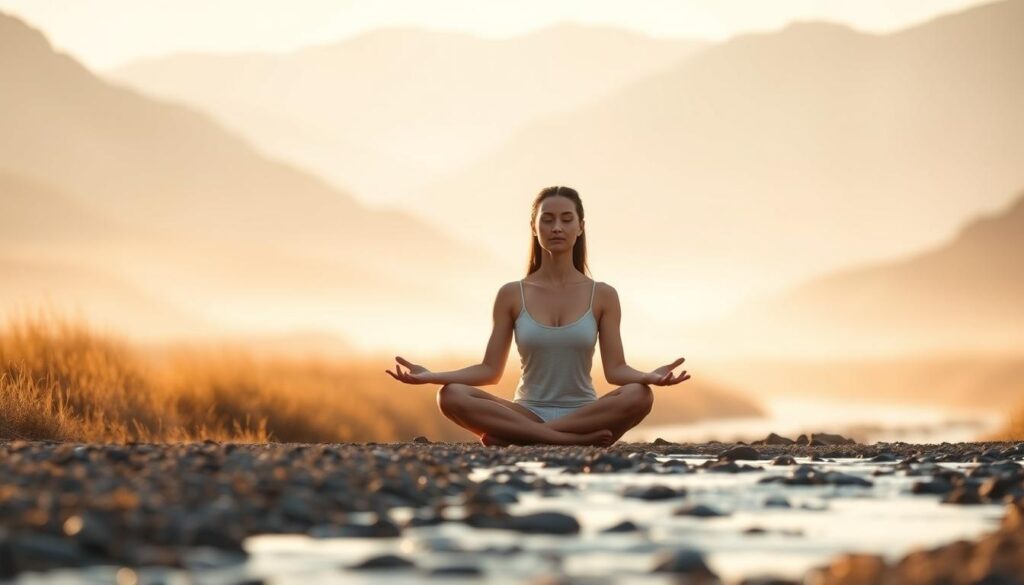
Meditation shifts breathing rate, lowers cortisol and heart rate, and reduces inflammation faster than many expect. Over time, it rewires responses so you spot spirals sooner and return to the moment with less reactivity.
| Marker | Fast change with meditation | How pairing helps |
|---|---|---|
| Breathing & heart rate | Slower within minutes | Light lifts mood; meditation sustains relaxation |
| Cortisol | Declines after short practice | Combined approach reduces stress anxiety load |
| Attention & awareness | Improves with regular practice | Better focus through the day and clearer responses |
Small, time-friendly routines fit real life. A few minutes each day can lower physiological markers and build a calmer baseline for work, family, and news cycles.
What is Red Light Therapy and how it supports a calmer mind
Red light therapy uses red and near‑infrared wavelengths to boost cellular energy and speed recovery. These wavelengths help mitochondria produce more ATP, which can raise mood and increase daytime energy. That physical lift often makes meditation easier to start and sustain.
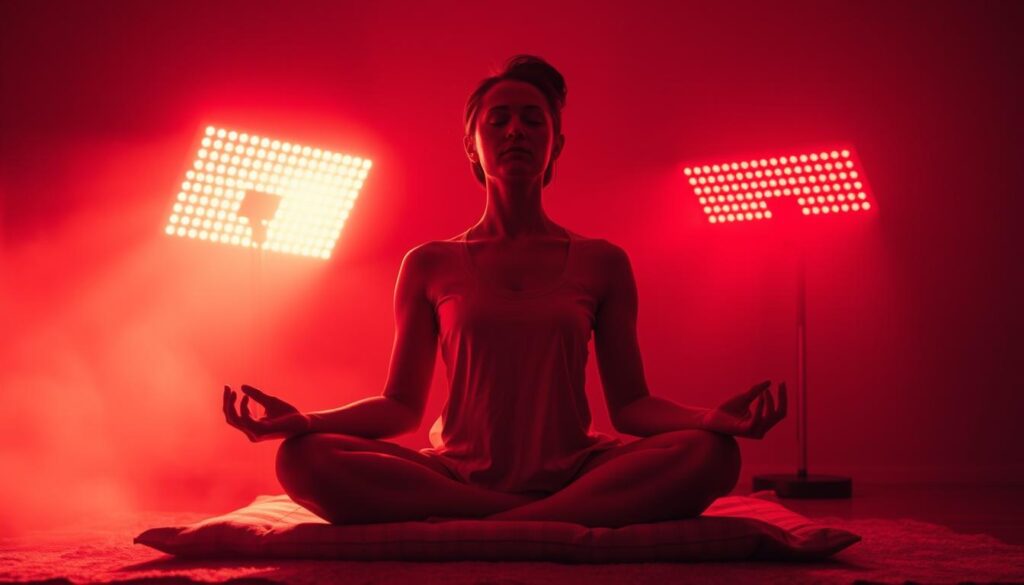
Red and near‑infrared: cellular energy, inflammation, and mood
Red and near‑infrared light lowers inflammation and eases muscle soreness. When the body carries less inflammation, the mind faces fewer bodily distractions and less background tension.
Improved cellular function can translate to clearer thought and reduced perceived stress. Many people report immediate changes in how relaxed and refreshed they feel after a short visit.
Session basics: 20-minute booth, skin exposure, and comfort tips
The Red Light Vitality Booth delivers red and near‑infrared light with a gentle pharmaceutical‑grade salt mist in a private 20‑minute session for one or two people.
- Wear a tank top and shorts to expose more skin and maximize effects.
- Sit relaxed in the quiet, private environment to let your nervous system unwind.
- Plan a short meditation right after: the boosted mood and energy prime your focus.
| Feature | What it does | Why it helps meditation |
|---|---|---|
| Red & near‑infrared light | Boosts cellular energy and reduces inflammation | Makes attention easier by lowering bodily distractions |
| 20-minute private session | Quick, consistent exposure with salt mist support | Efficient routine that fits daily life and primes calm |
| Skin exposure (tank top/shorts) | Maximizes whole‑body response | Faster mood lift and smoother transition into meditation |
RLT does not replace practice; it supports wellness and makes each meditation session require less effort. Over time, regular short sessions can build cumulative changes that lower daily stress and improve overall health.
Meditation’s science-backed path from stress to serenity
Short, focused meditation sessions trigger quick shifts in body and mind that compound over time. This practice trains attention and awareness so you notice thoughts and gently return to the present moment.
Mindfulness mechanics: attention, awareness, and the present moment
Practice means a simple cycle: notice a thought, label it if helpful, and bring your focus back to breath or a sound. Over time, this reduces rumination and improves focus.
Physiologic shifts: lower cortisol, heart rate, breathing rate, and inflammation
Even ten-minute meditation sits slow breathing and lower heart rate. Research links practice to reduced cortisol and lower blood pressure, plus less inflammation. These changes make the body calmer and make it easier to reduce stress.
- Pause effect: meditation builds the gap between impulse and response.
- Brain adaptation: regular practice creates lasting changes in brain circuits for emotion regulation.
- Practical start: begin with breath or simple sound awareness to settle quickly.
Pairing this mental training with mood-lifting light makes meditation more accessible. The combined approach supports steady gains and clear, real-world benefits meditation can deliver.
The synergy: pairing RLT’s mood lift with meditation’s mental calm
When cellular energy gets a boost from red light, the mind often follows into calmer, clearer states.
Nervous system balance: from fight-or-flight to relaxation response
Red light can make you feel brighter and more receptive by supporting cellular regeneration and steady energy.
That uplift reduces friction when you begin a short meditation. The body shifts away from fight-or-flight and toward a clear relaxation response.
From reactive to reflective: creating the pause before you respond
Entering practice already uplifted by light helps you hold attention and awareness with less effort.
This makes it easier to pause, notice a reaction, and choose a calmer response instead of reacting on autopilot.
Compounding effects over time: brain changes and emotional resilience
Regular pairing reshapes brain circuits for emotion and focus while supporting bodily balance.
Over weeks, you get more steady days, fewer spikes of anxiety, and lasting relief that helps overall health and sleep.
- Immediate: mood lift plus simple meditation gives fast relief and clearer focus.
- Ongoing: daily practice builds awareness and a more resilient state.
- Optional: vibroacoustic sessions can deepen relaxation and reduce anxiety further when needed.
| Effect | Red light role | Meditation role |
|---|---|---|
| Mood & energy | Boosts cellular ATP and daytime lift | Sustains calm and steady attention |
| Nervous system | Lowers bodily tension | Triggers relaxation response |
| Long-term resilience | Supports recovery and sleep | Rewires brain for less reactivity |
Takeaway: two simple modalities—one short light session, one brief meditation—create a reinforcing cycle that delivers both quick relief and lasting benefits.
Building your anti-anxiety routine: timing, order, and duration
Start with a short plan that fits your schedule so habit formation feels simple and doable.
Best order: begin with a 20-minute Red Light Vitality Booth session, then follow with a 10-minute meditation. The light lifts cellular energy and eases bodily tension, making it easier to settle the mind.
Time-savvy formats
Standard flow: 20 minutes of light + 10 mindful minutes. For busy days, cut the sit to 5 minutes or use two 3-minute micro-sits later in the day.
Weekly cadence
Aim for two to four sessions per week to start. Track how you feel after morning versus evening sessions to find what fits your routine and supports sleep and daytime wellness.
- Personalize: choose posture and light exposure that feel comfortable for each person.
- Consistency matters: regular short practice beats irregular long sessions.
- Reset option: add a weekly 30–40 minute vibroacoustic session when you want deeper relaxation or a sleep tune-up.
Practical tip: pair sessions with simple activities—after a workout or before bedtime—so the habit sticks without adding stress. Small, repeated actions help both body and mind over time.
From Stressed to Serene: The Powerful Anti-Anxiety Benefits of an RLT-Meditation
A short, paired session often gives a clear, feelable drop in tension within minutes. This is not just anecdote: a 20‑minute red light session lifts mood and energy while a brief meditation shifts breathing and heart rate.
Reduced tension and anxiety levels in minutes, not months
Quick wins matter. Many people notice less tension and eased anxiety within minutes after a single paired session.
RLT’s mood and energy lift reduces bodily friction. Meditation then triggers a physiologic downshift that calms the nervous system.
“A short routine can change how you feel fast — and that motivation helps you keep going.”
Improved focus, attention, and sense of calm in daily activities
One paired session often sharpens focus and attention for meetings or chores the same day.
This is clear‑headed calm — not passivity. You get steady energy plus a calmer sense when handling tasks.
- Immediate: less tension and clearer focus in minutes.
- Practical: smoother transitions between tasks and fewer spikes of irritability.
- Track it: log session time and “minutes to calm” to watch progress over weeks.
Realistic note: lasting change builds with repetition, but fast relief helps motivation. Try one session before your next busy afternoon and notice the difference.
Sleep better, feel better: how the combo supports sleep quality
An evening ritual that pairs mood‑lifting red light with a short breathing practice can change how easily you fall asleep.
Evening wind-down: light timing and mindful breath
Finish blue‑light screens an hour before bed. Take a 20‑minute RLT session earlier in the evening to lift mood without overstimulating your body.
Follow with a 10‑minute meditation focused on simple breath to lower cortisol and heart rate. This brief practice helps create a clear cue that the day is ending and supports relaxation.
Sleep metrics that matter: latency, awakenings, and depth
Track time to fall asleep, number of awakenings, and perceived sleep depth to see real change. Improving these markers shows better sleep quality and better health the next day.
- Keep your environment cool, dark, and consistent for steady gains.
- Use a short vibroacoustic session if anxiety or stress is high to deepen the unwind.
- Even one paired session can make falling asleep easier on hard nights.
Try different timing over days and weeks. As body and mind adapt, you’ll wake with a stronger sense calm and clearer thinking.
Mindfulness in motion: weaving calm into the present moment
A two-minute pause between tasks offers a simple route back to clarity and steady breathing. Small resets carry the anti-anxiety gains from your booth and formal practice into ordinary moments.
Micro-meditations: 2–3 minute resets during the day
Try short sits: breathe in for four counts, out for four, and repeat for two minutes. This brief meditation is ideal before calls or between meetings.
Dr. Sara Lazar notes that micro-meditations can be effective at shifting attention and lowering reactivity.
Nature, walking, and breath: accessible ways to reduce stress
Step outside and use a mindful walk to anchor awareness. Notice sounds, textures, and the sense of your feet. This is a friendly way to practice on days you can’t sit still.
- Use a short “off-ramp” ritual — slow stretches or paced walking to move from doing to being.
- Keep eyes comfortable: partly closed or open, whatever helps sustain attention without nodding off.
- Bookmark cues — doorways, water sips, or alerts — to remind you to reset through daily activities.
Remember: frequent small practices, alone or with others, add up. The goal is a kinder relationship with your mind, not perfection.
Enhancing the experience: vibroacoustic sound and salt therapy
Layering gentle vibration and targeted sound can help your body drop into deeper rest faster than silence alone. These add-ons deepen the core red light + meditation habit by widening the window for calm and recovery.
Vibroacoustic sound lounge: deep relaxation, anxiety relief, and sleep
The InHarmony Sound Lounge uses four tactile transducers and noise‑reduction headphones in a 30–40 minute immersive session.
The low-frequency vibration and layered audio help the body and mind slide into deep relaxation. Many people report clear anxiety relief, eased muscle tension, and better sleep after a single session.
Use this before bed or after intense days to improve sleep and recovery. It also makes sitting or lying for meditation easier by softening physical discomfort.
Salt therapy’s supportive role for breath, skin, and overall wellness
The Red Light Vitality Booth’s pharmaceutical‑grade salt mist cleanses airways and soothes skin while enhancing light absorption.
This quiet combination supports better breath, clearer skin, and a refreshed sense of vitality that complements meditation practice.
- These activities are complementary—try them strategically, not daily.
- Respect others: keep devices silent and maintain a calm environment.
- Experiment with frequency to find the cadence that brings inner peace and lasting benefits.
Safety, comfort, and personalization: making sessions work for you
Safe, comfortable sessions start with small choices you control—what you wear, how you sit, and how long you spend. These simple decisions help each visit feel inviting and support steady practice.
Clothing, positioning, and eye preferences
For red light, wear a tank top and shorts to maximize skin exposure while staying comfortable. This helps the light reach more areas without extra fuss.
For meditation, choose the posture that suits you: chair, cushion, or lying down. Eyes closed reduce distraction; three‑quarters closed can prevent sleepiness. Try both and notice which stabilizes your state best.
Who should consult a professional before starting
Check with a provider if you have light sensitivity, active skin conditions, respiratory concerns, or complex mental health levels. People with medical devices, photosensitive conditions, or pregnancy should discuss RLT with their clinician first.
- Short sessions are valid—pick the time and length you’ll keep consistently.
- Start gently and increase session length as comfort grows.
- Be kind to yourself and others; personalization is the point, not perfection.
“Comfort predicts consistency—build a routine you enjoy and it will stick.”
Track your progress: mood, stress, and sleep improvements
Measuring change helps keep you motivated and lets you fine‑tune what actually works. A simple log makes trends visible: less anxiety, steadier mood, and better sleep show up quickly when you record consistent sessions.
Simple logs for symptoms, session times, and changes over time
Use a compact template: date, session time, duration, and how you felt before and after. Add brief notes about the environment and activities that day.
- Daily ratings (0–10) for stress and anxiety, with a quick note on attention and sense calm.
- Sleep metrics: time to fall asleep, awakenings, and perceived sleep quality or depth.
- Optional: occasional blood pressure readings if your provider suggests tracking that metric.
| What to record | Why it matters | How often |
|---|---|---|
| Session date & time | Shows cadence and best time of day | Every session |
| Stress & anxiety rating | Tracks short-term relief and long-term trends | Daily |
| Sleep latency & quality | Links practice to improve sleep quality | Nightly |
| Attention & brain notes | Highlights improved focus and fewer automatic reactions | Weekly summary |
Also log activities that influence results—exercise, caffeine timing, screen exposure, and room setup. Review entries weekly to spot patterns and adjust session length, order, or environment for better outcomes.
“Celebrate small wins: steady, measurable changes encourage ongoing practice.”
Conclusion
Conclusion
Begin this week with one paired session and a ten-minute meditation to feel immediate relief and start steady gains.
Pairing red light’s mood lift with simple breath work eases stress and anxiety while helping the body and mind settle. Short, regular practice reshapes the brain so calm becomes your baseline.
Add vibroacoustic or salt support when life feels loud. Track sessions and small changes; seeing progress keeps you going.
Start small, meet yourself in the present moment, and celebrate each session. This friendly habit is a practical route to more attention, inner peace, and daily wellness.