
What if your path to better health doesn’t start with another supplement or treatment? Research shows that your mental state directly influences how your cells respond to healing signals. This isn’t just feel-good advice. It’s backed by cellular healing science that’s changing how we see wellness.
Your cells have built-in receptors that act like tiny antennas. They pick up signals from your environment and your nervous system. When stress floods your system, these receptors close down. But when you achieve calm mind healing, something remarkable happens at the biological level.
The mind-body connection isn’t mysterious anymore. Scientists can now measure how relaxation changes cellular receptivity. Your autonomic system switches from defense mode to growth mode. This shift unlocks your body’s healing in measurable ways.
In this article, we’ll explore how this process works. You’ll learn practical methods to activate your innate healing capacity. We’re making complex biology simple steps you can use today.
Key Takeaways
- Your mental state directly affects how your cells function and respond to healing signals at the biological level
- Cellular receptors act like antennas that open or close based on nervous system signals from stress or relaxation
- The mind-body connection operates through measurable changes in cellular receptivity and the autonomic nervous system
- Stress activates defense mode in cells, while calmness switches them to growth and repair mode
- Scientific research now provides concrete evidence for how calm mind healing unlocks the body’s healing
- Practical techniques exist to intentionally activate your innate healing capacity through nervous system regulation
Why Your Cells Can’t Hear You When You’re Stressed
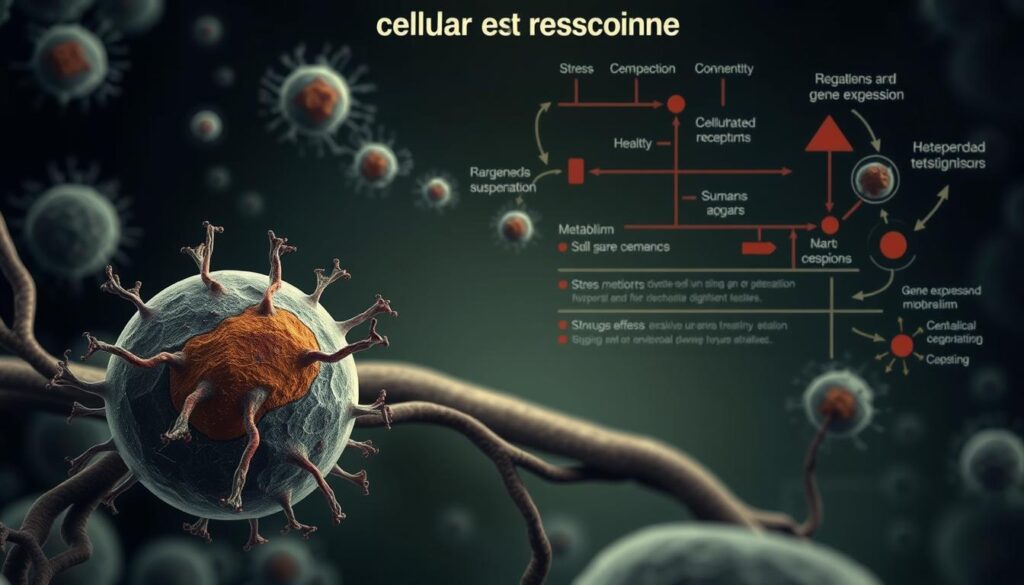
Imagine trying to hear someone whisper important instructions next to a jet engine. That’s what your cells feel when you’re stressed. The link between stress and cellular function is more than just feeling overwhelmed. It’s a breakdown in communication at the smallest level.
Your body has about 37 trillion cells, each needing specific signals for healing. Stress hormones create “noise” that blocks these messages. Stressed cells can’t get the healing instructions your body sends.
This problem isn’t easy to see or feel, making it very dangerous. You might spend a lot on wellness without realizing stress is blocking its effects. The science shows that your mental state is as important as physical treatments.
The Hidden Cost of Living in Overdrive
Many people live in a constant state of stress without realizing it. We often think these signs are just normal life. Do you wake up tired, even after sleeping enough? Does your mind race when you try to relax?
These aren’t flaws or modern life’s price. They show your nervous system is always on high alert. The chronic stress effects go beyond just feeling tired or irritable.
Living in overdrive mode means your body makes tough choices. It redirects blood flow away from important areas. Your immune system gets weaker, and injuries heal slower. You also get sick more easily.
Worse, your cells become less responsive to good things. That expensive probiotic? Your stressed cells can’t use it well. The anti-inflammatory foods you eat? They can’t get into your cells to help.
| Body System | Normal Function | Under Chronic Stress | Impact on Healing |
|---|---|---|---|
| Digestive System | Efficient nutrient absorption and gut repair | Reduced blood flow, impaired nutrient uptake | Poor absorption of healing compounds from food and supplements |
| Immune Function | Balanced response to threats, efficient tissue repair | Chronic inflammation, overactive or suppressed immunity | Delayed wound healing, increased infection risk |
| Cellular Energy Production | Optimal mitochondrial ATP generation | Reduced oxygen delivery, impaired energy synthesis | Insufficient cellular energy for repair processes |
| Hormone Regulation | Balanced production and receptor sensitivity | Elevated cortisol, receptor downregulation | Cells become resistant to healing signals |
The table shows how chronic stress affects your body over time. Each problem creates a chain of issues that stop your body from healing. You’re not broken—your cells are just trying to survive, not heal.
What This Article Will Reveal About Your Healing Potentia
Here’s the good news: you can change how stress affects your cells. Your healing capacity isn’t fixed by genetics. It’s mostly about your nervous system and how open your cells are to healing.
In this article, you’ll learn how stress blocks cellular communication. We’ll talk about how your nervous system controls which cells heal. You’ll see why timing is key for treatments to work.
Most importantly, you’ll find out how to make your body ready to heal. We’ll look at how calmness changes your cells. You’ll understand why some treatments need your cells to work.
By the end, you’ll know when your cells are ready to heal. You’ll have ways to make your body ready for wellness practices. And you’ll see that the best healing tool is controlling your nervous system and unlocking your healing capacity.
This isn’t about adding more treatments. It’s about making the ones you do work by helping your cells hear the healing messages they need.
The Two Operating Systems Your Body Runs On
Your body makes a big choice every moment. It decides whether to protect you from danger or heal you. This choice isn’t made with your mind. Instead, it’s controlled by your autonomic nervous system, like a computer with only one program running at a time.
These two programs are like different modes. One gets you ready to face threats and survive. The other helps your body repair itself, digest food, and rebuild strength.
Your body can’t run both programs at once. Knowing this is the first step to unlocking your body’s healing powers.
Fight or Flight: Your Survival Mode
The fight or flight response is your body’s emergency system. When you see danger, like a car swerving or a stressful email, your body goes into survival mode fast.
In this state, your body changes a lot. Your heart beats faster, and you breathe quicker. Your pupils get bigger to see better.
Blood moves away from your stomach and to your muscles. Your liver gives you quick energy. Stress hormones fill your blood, making everything alert.
The fight or flight response is a physiological reaction to danger.
This survival mode helped our ancestors face dangers. But, it can’t tell the difference between real threats and today’s stressors like traffic or work deadlines.
When fight or flight kicks in, your body stops non-essential functions. Healing and repair slow down. Your immune system takes a back seat. Everything focuses on survival.
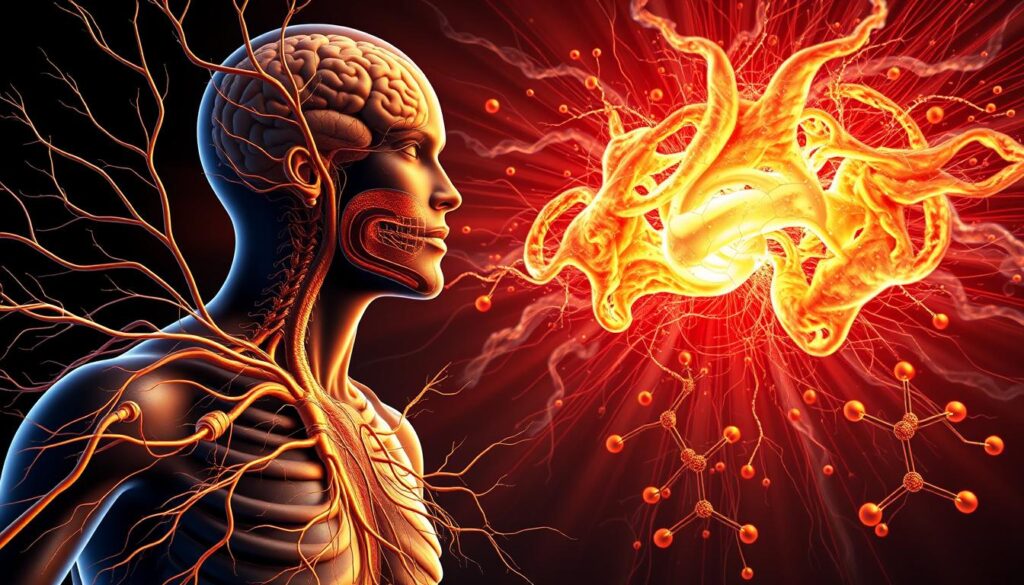
Rest and Digest: Your Healing Mode
On the other side is rest and digest mode, your healing state. This is when your body repairs itself, boosts your immune system, and regenerates.
Scientists call this parasympathetic activation. It’s like your body’s maintenance team working. When this system is active, your body focuses on healing.
Your heart rate slows down, and your breathing gets deeper. Blood flows to your digestive system, helping you digest food.
In this state, your body repairs itself. Wounds heal faster. Inflammation goes down. Your body makes proteins and molecules for health.
This is when therapies like red light treatment, supplements, and medications work best. Your cells are open to these treatments, not locked down in defense mode.
Why You Can’t Run Both Systems Simultaneously
Your body’s systems work against each other. Trying to use both at once is like pressing the gas and brake at the same time.
The reason is simple—resource allocation. Your body has limited blood, oxygen, and energy. It must choose where to use these resources.
When fight or flight is active, resources go to survival, not healing. When rest and digest takes over, resources go to healing, not survival.
| Body Function | Survival Mode (Fight or Flight) | Healing Mode (Rest and Digest) |
|---|---|---|
| Heart Rate | Increased (90-120+ bpm) | Decreased (60-80 bpm) |
| Blood Flow Priority | Muscles and extremities | Digestive organs and core |
| Cellular Receptivity | Closed and defensive | Open and receptive |
| Immune Function | Suppressed | Enhanced |
| Tissue Repair | Paused | Active |
Most people spend most of their time in survival mode. Modern life keeps your stress response on with constant stimulation—notifications, deadlines, traffic, news alerts, and social pressures.
This is bad for healing. If your body rarely enters rest and digest mode, it can’t do its maintenance work. Your cells stay closed to treatments and nutrients that could help you feel better.
The good news? You can learn to switch between these modes. You can create conditions that signal safety to your body, letting parasympathetic activation happen more often.
This shift is key for healing therapies to work well. Whether it’s red light therapy, supplements, or recovering from illness, your results depend on which mode your body is in.
Meet Your Autonomic Nervous System
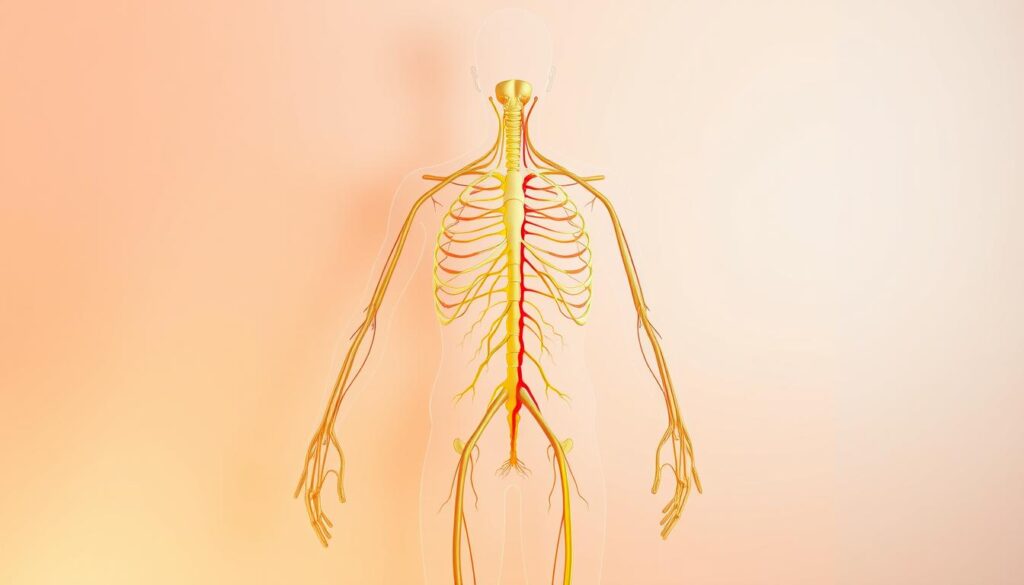
Every second, a system inside you makes thousands of decisions about energy use. This system is called the autonomic nervous system. It controls functions you don’t think about, like your heartbeat and digestion.
This system has two main parts. Each part controls different functions. Knowing this helps us see how our mind affects our body’s healing.
This system reacts fast to your thoughts and feelings. So, you have more control over it than you think.
Your Internal Alarm System
The sympathetic nervous system is your body’s security system. It acts fast when it sees a threat. It releases chemicals like adrenaline to get you ready to act.
This system is like a smoke detector. It doesn’t wait to see if there’s really a fire. Stress or worries can trigger it just like a real threat.
When it activates, your body changes a lot. Your heart beats faster, and you breathe more shallowly. Blood goes to your muscles and brain.
This system is meant to save you in emergencies. But, it’s a problem if it stays on too long because of stress.
Your Repair Department
The parasympathetic nervous system is the opposite. It works when you feel safe and calm. It helps your body repair and heal.
When it’s in charge, your body focuses on repair. Digestion works better, and your immune system fights off sickness. Your body can heal faster.
This system uses a chemical called acetylcholine to calm you down. It slows your heart rate and makes your cells more open to healing.
This is when your body is most ready to heal. Supplements and food work better when this system is active.
Finding the Sweet Spot Between Action and Rest
Understanding nervous system balance is key. You need both parts working, but at the right times. It’s not about avoiding stress, but finding a balance.
Your body is meant to switch between these states. Stress triggers the alarm system, then you calm down. This keeps your systems in check.
But, modern life often keeps you in alarm mode too long. You might be stressed or distracted for 12-16 hours a day. This stops your body from healing properly.
This imbalance is called “autonomic dysfunction.” Your body can’t repair itself well. Healing slows down, and energy drops.
The good news is you can change this. Simple things like deep breathing and meditation can help. They tell your system it’s safe to heal.
How Stress Hijacks Your Body’s Resources
Stress doesn’t just make you feel different; it fundamentally reorganizes how your body allocates its most precious resources. Within seconds of perceiving a threat, your body executes a dramatic internal redistribution that affects every organ system. This resource allocation happens automatically, without your conscious permission, prioritizing immediate survival over long-term maintenance.
Understanding where your resources go during stress helps explain why healing becomes so difficult when you’re anxious, worried, or overwhelmed. Your body isn’t broken—it’s simply following ancient programming that doesn’t distinguish between a charging predator and a demanding email inbox.
Where Your Blood Goes During a Stress Response
During a stress response, your cardiovascular system performs a remarkable rerouting operation. Blood flow shifts dramatically away from your core organs toward your extremities and brain’s threat-detection centers. Your large muscle groups—quads, hamstrings, and shoulders—receive up to 300% more blood than normal, preparing you for physical action.
While this, blood flow during stress decreases significantly to your digestive tract by approximately 50-70%. Your skin receives less circulation, which is why you might look pale when frightened. Your reproductive organs also experience reduced blood supply, as procreation takes a backseat to survival.
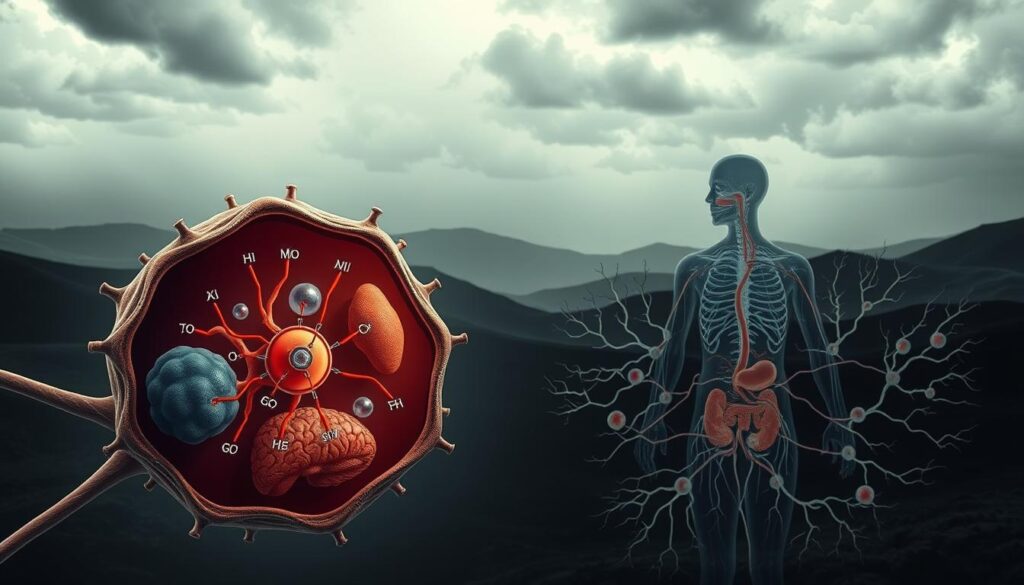
This redistribution explains common stress symptoms. That queasy feeling before a presentation? Reduced digestive blood flow. Cold hands during anxiety? Blood diverted from your extremities’ surface. These aren’t random discomforts—they’re evidence of your body’s resource management during perceived danger.
The redirection happens so quickly that you can actually feel it happening. Your heart pounds as it works harder to redirect circulation. Your breathing quickens to oxygenate the newly prioritized muscle tissue. Within 30 seconds, your body has completely reorganized its internal economy.
The Shutdown of Non-Essential Systems
When your body enters survival mode, it doesn’t just redirect resources—it actively shuts down systems deemed non-essential for immediate survival. This conservation strategy makes perfect biological sense for short-term threats. After all, why waste energy digesting lunch when you might become lunch?
Your digestive system slows dramatically, sometimes stopping peristalsis almost completely. Digestive enzyme production decreases, and stomach acid secretion changes. This explains why stress and healing of digestive issues rarely happen simultaneously—your gut literally goes on standby.
Your immune surveillance decreases during acute stress. While some immune functions actually increase temporarily, the sophisticated immune processes that identify and eliminate cancer cells, repair damaged tissue, and fight infections get deprioritized. Your body effectively says, “We’ll worry about that virus later—right now we need to survive this threat.”
Other systems that get dialed down include:
- Tissue repair and regeneration: Cellular maintenance activities pause, wounds heal more slowly, and skin cell turnover decreases
- Reproductive hormone production: Fertility markers drop as the body conserves resources for survival over reproduction
- Growth and development processes: Protein synthesis for muscle building and tissue growth slows considerably
- Detoxification activities: Liver detoxification pathways operate at reduced capacity during sustained stress
- Cellular housekeeping: The cleanup of damaged cellular components (autophagy) decreases when stress hormones dominate
This isn’t a design flaw—it’s brilliant short-term strategy. The problem emerges when these temporary measures become your permanent operating condition.
Why Chronic Stress Means Chronic Resource Depletion
The adaptations that save your life during acute danger become devastating when activated constantly. Chronic stress creates a state of perpetual resource depletion where your healing systems never receive adequate energy, nutrients, or biological signals to function properly.
When your body runs the stress response continuously, it’s like keeping your car in first gear on the highway. The engine screams, fuel efficiency plummets, and wear accelerates dramatically. Your body experiences similar consequences with resource allocation stuck in crisis mode.
The table below illustrates how dramatically resource distribution changes between calm and stressed states:
| Body System | Calm State Resource Level | Stress State Resource Level | Impact on Healing |
|---|---|---|---|
| Digestive System | 100% blood flow | 30-50% blood flow | Nutrient absorption severely compromised |
| Immune Surveillance | Full capacity operation | 40-60% capacity | Reduced infection fighting and repair |
| Skeletal Muscles | Baseline circulation | 300% increased blood flow | Resources diverted from repair systems |
| Tissue Repair | Active regeneration | Paused or minimal activity | Wounds heal 40% slower under stress |
| Cellular Maintenance | Continuous housekeeping | Significantly reduced | Cellular debris accumulates over time |
Chronic stress depletes more than just energy—it exhausts your body’s ability to maintain itself. Your repair systems require consistent resource access to function. When blood flow, oxygen, and nutrients constantly get redirected elsewhere, healing capacity diminishes progressively.
This explains why people under sustained stress often experience multiple health issues simultaneously. It’s not bad luck or separate problems—it’s the predictable consequence of running repair systems on a starvation budget. Your body simply cannot heal what it cannot adequately resource.
The encouraging news? This process reverses when you shift into genuine calm states. Resource allocation is dynamic, not permanent. When your nervous system receives authentic safety signals, blood flow returns to healing systems, immune function rebounds, and cellular repair resumes. The key lies in learning how to flip that switch intentionally—something we’ll explore in the practical sections ahead.
The Cellular Level: Where the Magic Happens
The real magic of healing happens at the cell level. Every treatment and nutrient must first pass through the cell membrane. This barrier is not just a simple wall.
It’s a sophisticated gatekeeper system that constantly evaluates what deserves entry. Understanding how this system works reveals why your mental state plays such a key role in cellular permeability and healing.
Understanding Cell Membrane Receptors
Think of your cells as exclusive nightclubs with the world’s most sophisticated security system. The bouncers at these clubs are specialized proteins called cell membrane receptors. These remarkable structures sit embedded in your cell’s outer wall, scanning the environment for specific molecules.
Each receptor is designed to recognize particular substances—hormones, nutrients, or signaling compounds. When the right molecule approaches, the receptor changes shape and opens a pathway. This process is often described as a lock-and-key mechanism, where only the correct key can unlock the door.
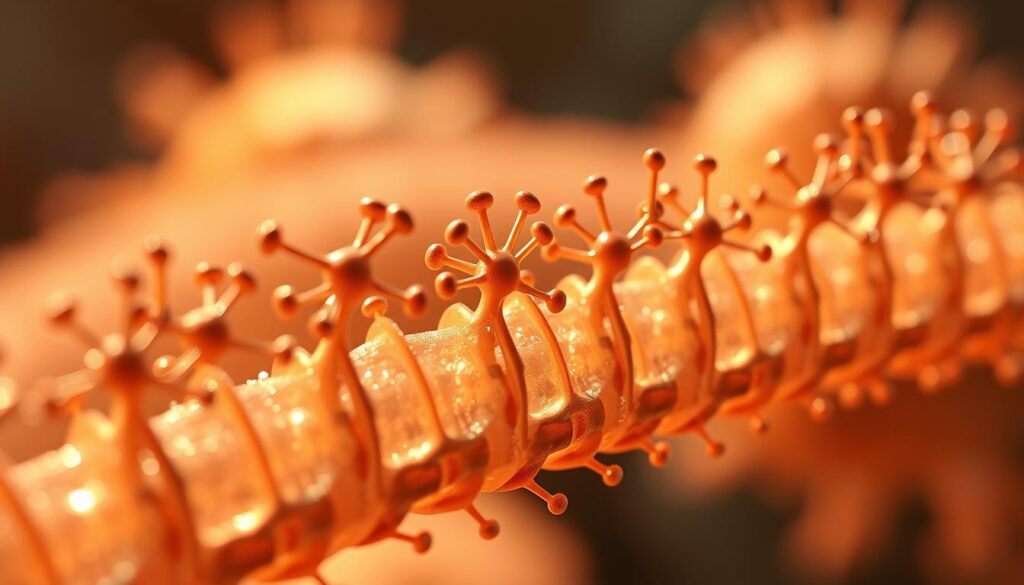
But cell membrane receptors do more than just open doors. They act as communication devices that relay critical information from the outside world to your cell’s interior. When a receptor binds with the right molecule, it triggers a cascade of events inside the cell.
This signal might tell the cell to produce certain proteins, release stored energy, or prepare for repair work. Your cellular function depends entirely on these receptors working properly and staying open to the right signals.
How Cells Decide What to Let In
Your cells aren’t passive recipients that accept everything that comes their way. They’re active participants in a complex decision-making process. The cell membrane uses multiple types of receptors to evaluate the environment simultaneously.
Some receptors respond to chemical signals floating in your bloodstream. Others detect electrical charges or mechanical forces. Together, they create a complete picture of what’s happening outside the cell.
- Chemical receptors: Recognize specific molecules like hormones, vitamins, and minerals essential for nutrient absorption
- Voltage-gated channels: Respond to electrical charges and help coordinate cellular activities
- Mechanoreceptors: Detect physical pressure and movement in the surrounding tissue
- Temperature sensors: Monitor thermal changes that might signal danger or opportunity
This multi-layered security system ensures that cells make smart choices about what to allow inside. When everything is working correctly, beneficial substances get the green light while harmful ones get turned away. The efficiency of this process directly impacts cellular function and your overall health.
Here’s where it gets fascinating: cells can adjust their receptivity based on the signals they receive. During times of safety and calm, receptors become more available and responsive. This enhanced state allows for better nutrient absorption and more efficient healing processes.
The Concept of Cellular Permeability
Your cell membrane exists on a spectrum, not in a fixed state. Scientists call this variable openness cellular permeability. Think of it like the iris of your eye, which opens wide in darkness and constricts in bright light.
Similar to your eye’s iris, your cell membranes can be tightly closed or highly receptive. A highly permeable cell welcomes beneficial molecules and responds quickly to healing signals. A closed cell blocks entry and becomes resistant to interventions.
This cellular permeability isn’t random or fixed. It changes dramatically based on the chemical environment surrounding your cells. When stress hormones flood your system, they signal your cells to close down and protect themselves.
The cell membrane becomes less fluid and more rigid. Receptors become less responsive or withdraw entirely from the surface. This protective response made sense for our ancestors facing immediate physical threats.
But here’s the critical insight: your cellular permeability also responds to signals generated by your mental state. When your nervous system registers safety and calm, it sends completely different chemical messages to your cells. These signals tell your cell membrane that it’s safe to open up, accept nutrients, and engage in repair work.
This connection between your mental state and cellular openness explains why the same treatment can produce different results depending on your stress level. A cell that’s closed due to stress responses simply can’t benefit from healing interventions as effectively. The doorway remains locked, no matter how beneficial the treatment waiting outside might be.
The Science of Cellular Receptivity: How a Calm Mind Unlocks Your Body’s Healing
Deep inside your body, millions of cells decide to open or close their doors to healing. This choice happens fast, based on electrical signals that change with your mood. Your thoughts and feelings affect your cells through complex biological processes.
When you’re calm, your cells welcome nutrients, oxygen, and treatments. Stress makes them close their doors, focusing on survival. This change in cellular receptivity affects how well your body heals.
Why some treatments work for one person but not another? It’s often because of their nervous system state. This state changes the cellular environment, affecting treatment outcomes.
What Cellular Receptivity Really Means
Cellular receptivity means your cells are open and ready to receive. Imagine a house with open doors and windows when it’s safe. This lets in what’s needed and keeps out what’s not.
In this state, cells take in nutrients and oxygen easily. Waste products leave without trouble. It’s like a smooth flow of traffic.
Cell surface receptors, like special mailboxes, are ready to receive messages. These messages can be hormones, nutrients, or treatments.
But when cells are stressed, they become less open. It’s like a house locking down during a storm. This makes healing harder.
Cells in a receptive state can use treatments up to ten times better. This applies to medicines, supplements, and even light therapy.
Your mental state controls your cells’ openness. This isn’t just a saying—it’s a real biological process.
The Voltage-Gated Channels That Control Healing
The gatekeepers of your cells are called voltage-gated channels. These proteins control the flow of ions across your cell membranes. They open and close based on electrical signals.
Think of these channels as automatic doors. They open or close based on the electrical charge around the cell.
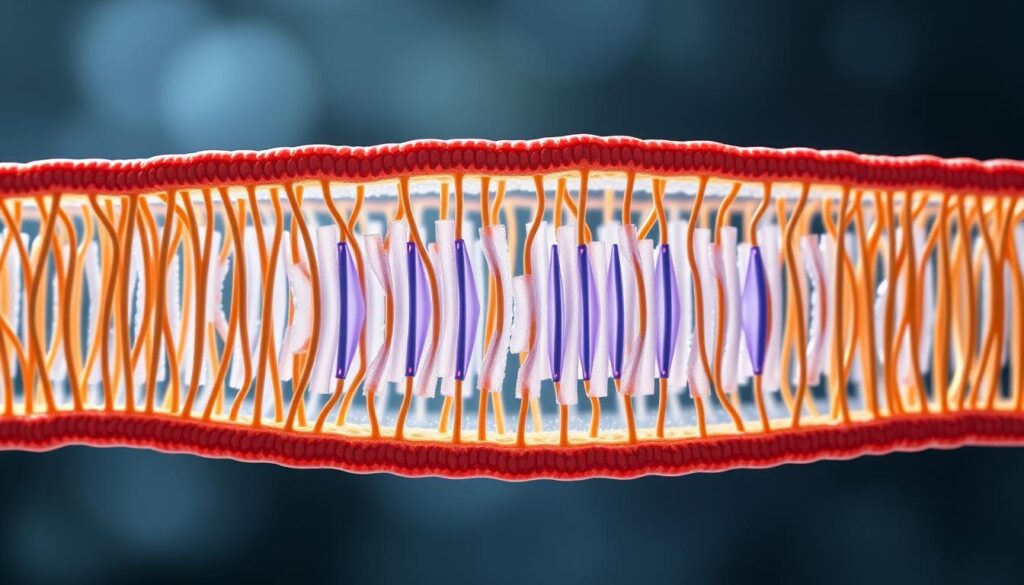
- Calcium channels that regulate muscle contraction, neurotransmitter release, and gene expression
- Sodium channels that control nerve signal transmission and nutrient absorption
- Potassium channels that maintain cellular electrical balance and regulate inflammation
- Chloride channels that control cell volume and pH balance
When these channels work well, your cells can heal. Calcium ions start repair processes. Sodium and potassium keep energy flowing. Chloride helps keep the cell environment right for healing.
The position of these voltage-gated channels affects healing. Your nervous system controls their state.
In a calm state, your nervous system sends signals that open channels. This lets in what’s needed for healing.
How Mental State Changes Cellular Electrical Activity
Your thoughts change your cells through electrical signals. Your nervous system sends messages that alter cell membranes.
Being calm makes your parasympathetic nervous system send calming signals. These signals change ion channels, making cells more receptive.
This connection between mental state and healing is real and measurable. Researchers can see these changes with sensitive electrodes.
Stress does the opposite. It closes healing channels and opens defensive ones. This is because stress hormones change ion channel behavior.
The link between calm mind and cells is about creating the right electrical conditions. This supports repair and regeneration.
| Cell State | Membrane Potentials | Channel Status | Healing Capacity |
|---|---|---|---|
| Calm/Receptive | Optimal polarization (-70mV to -80mV) | Healing channels open | High nutrient uptake and repair activity |
| Stressed/Defensive | Depolarized (-40mV to -50mV) | Survival channels prioritized | Reduced receptivity and repair |
| Chronic Stress | Persistently abnormal voltage | Channel dysfunction | Minimal healing response |
Meditation and relaxation change cellular electrical activity for healing. They help your cells open up to healing signals.
This means treatments work better when cells are receptive. The same treatment can have different effects based on your nervous system state.
Your cells listen to your mind through electricity and chemistry. Calmness tells them it’s safe to heal.
Stress Hormones: The Messengers That Close Cellular Doors
Stress hormones act like emergency signals, telling cells to lock down and focus on survival. These biochemical messengers change how cells react to their surroundings. When they reach cells, they alter function, stopping healing processes.
Knowing about these hormones shows why managing stress is key. It’s not just about feeling better. It’s about creating the right environment for healing.
The Long Shadow of Cortisol on Your Cells
Cortisol is the main stress hormone for a reason. It binds to receptors in cell membranes, changing how cells work. This makes cells less open and less responsive.
Think of cortisol as a chemical signal that tells cells to prepare for danger. It makes cell membranes stiffer, blocking nutrients and healing compounds. Cortisol’s effects go beyond just closing doors; it changes how cells interact with their environment.
Chronic cortisol exposure is a big problem. Cells become less sensitive to cortisol, needing more to respond. This creates a cycle of resistance.
Long-term cortisol also triggers inflammation. This reduces how cells respond to healing signals. Cells become less open to insulin, growth factors, and treatments.
Here’s what chronic cortisol does to your cells:
- Decreases membrane fluidity by altering lipid composition in cell walls
- Reduces receptor sensitivity to healing hormones like insulin and growth hormone
- Promotes inflammatory signaling that creates cellular defensive states
- Impairs protein synthesis needed for cellular repair and regeneration
- Disrupts glucose uptake that provides energy for healing processes
When Adrenaline Redirects Your Cellular Resources
Adrenaline works fast, like a sprint coach for cells. It shifts energy from repair to survival needs.
Adrenaline signals cells to use stored energy quickly. It turns glycogen to glucose and increases metabolic rate. Cells focus on action, not healing.
Adrenaline’s effect on cells is temporary. It makes cells less able to heal. This is okay in emergencies, as you need energy now.
Adrenaline also changes blood flow. It constricts vessels, reducing nutrient and oxygen to healing tissues. Your digestive system and immune function suffer.
The metabolic shift triggered by adrenaline includes:
- Increased heart rate and blood pressure to deliver oxygen to survival-critical organs
- Glycogen breakdown for immediate glucose availability
- Suppressed digestive function to conserve energy
- Reduced immune activity as resources shift elsewhere
- Heightened nervous system arousal that maintains cellular alert status
The Development of Cellular Resistance
Chronic stress hormone levels lead to cellular resistance. Cells become less responsive to signals, including healing ones.
This resistance makes treatments less effective in stressed individuals. Cells have closed their doors as a defense. Constant stress hormone signals make receptors less responsive.
Cells under stress develop a kind of fatigue. They reduce receptors and become less responsive to signals. This shifts them into a defensive state.
This makes it hard for cells to receive:
- Nutrient signals from vitamins, minerals, and supplements
- Therapeutic compounds from medications or natural remedies
- Growth factors your body produces to stimulate repair
- Immune signals needed to coordinate healing responses
- Energy substrates required for cellular regeneration
The good news is that cellular resistance is reversible. When stress hormone levels drop, cells regain their responsiveness. Healing signals can then enter.
This reversibility shows why stress management is key for healing. Lowering stress hormones through relaxation practices changes cell receptivity. This allows healing to occur.
Understanding stress hormones as messengers that close cellular doors empowers you. You can’t control all stress, but you can manage it. This restores cellular receptivity and allows healing.
Your Mitochondria Under Stress: A Power Crisis
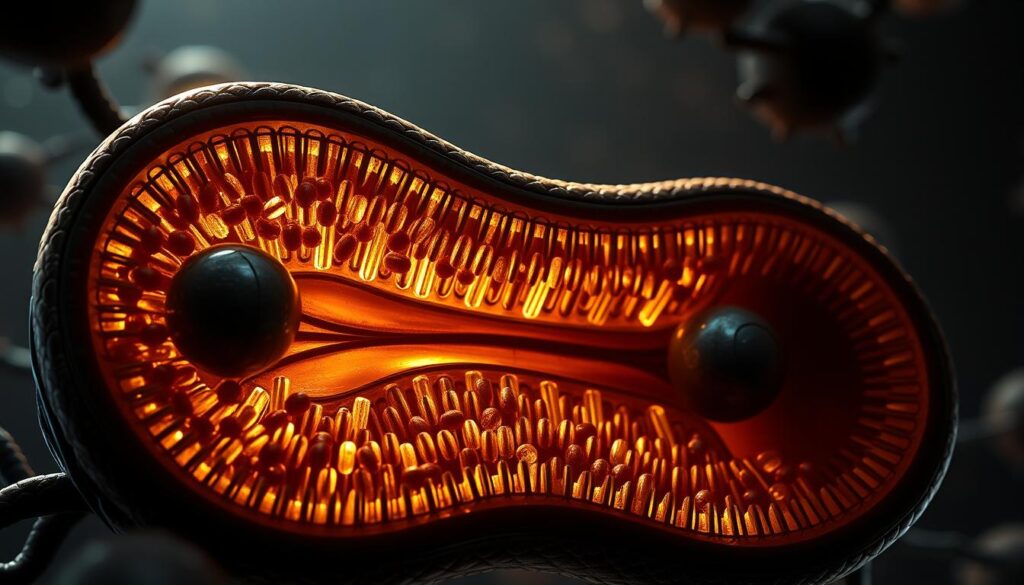
Inside every cell in your body, thousands of tiny power plants work around the clock to keep you alive and thriving. These remarkable structures are called mitochondria, and they’re responsible for creating the energy that fuels everything you do. From thinking and breathing to healing wounds and fighting infections, mitochondria make it all possible.
When stress takes over your life, these cellular powerhouses face a crisis that affects your entire body. Understanding how mitochondria generate energy—and what happens when stress disrupts their work—reveals another critical piece of the cellular receptivity puzzle.
How These Cellular Powerhouses Generate Energy
Mitochondria are like sophisticated factories with an elegant production process. They take the food you eat and the oxygen you breathe and transform them into ATP (adenosine triphosphate), which scientists call the energy currency of life. Every cellular function requires this fuel.
The process happens through something called oxidative phosphorylation. Think of it as an assembly line where nutrients pass through a series of stations, each one extracting energy and packaging it into ATP molecules. This system is incredibly efficient when conditions are right.
Your mitochondria need three essential things to work properly. First, they need quality raw materials—glucose, fatty acids, and oxygen. Second, they need the right cellular environment with proper pH balance and temperature. Third, and perhaps most importantly, they need calm conditions to operate at peak efficiency.
What Happens to ATP Production When You’re Stressed
When stress hormones flood your system, your mitochondria shift into crisis mode. They start producing energy through faster but less efficient pathways. It’s like switching from a fuel-efficient hybrid car to a gas-guzzling emergency generator.
During stress, mitochondrial function changes dramatically. Your cells need quick energy to fuel the fight-or-flight response, so mitochondria prioritize speed over sustainability. They produce ATP rapidly but generate significantly more waste products called free radicals or oxidative stress.
These free radicals damage cellular structures, including the mitochondria themselves. Over time, chronic stress creates a vicious cycle where damaged mitochondria produce less energy and more oxidative stress. This explains why people under constant pressure feel exhausted even after sleeping.
“Mitochondria are the canaries in the coal mine for cellular health. When they struggle, the entire cell struggles.”
The numbers tell a sobering story. Stressed mitochondria can reduce overall energy production by 30-50% compared to their calm-state capacity. Your cells are literally running on half power, which means less energy available for healing, repair, and responding to therapeutic interventions.
The Calm State Advantage for Energy Production
When your parasympathetic nervous system is active and you’re in a calm state, your mitochondria operate like well-oiled machines. They produce maximum ATP with minimal oxidative damage. This is the sweet spot for cellular energy and healing.
Calm states trigger several beneficial changes in mitochondrial function. First, ATP production becomes highly efficient, generating 36 ATP molecules from a single glucose molecule compared to just 2 ATP in stressed, anaerobic conditions. That’s an 18-fold increase in energy yield.
Second, parasympathetic activation reduces oxidative stress production. Your mitochondria create the energy you need without generating excessive free radicals that damage cellular structures. This preserves mitochondrial health for the long term.
Perhaps most remarkably, calm states promote something called mitochondrial biogenesis—the creation of brand new mitochondria. Your cells actually grow more power plants when they feel safe and relaxed. More mitochondria means more energy capacity for healing and regeneration.
| Condition | ATP Efficiency | Oxidative Stress | Healing Capacity |
|---|---|---|---|
| Chronic Stress State | 30-50% reduced output | High (excessive free radicals) | Severely limited |
| Normal Neutral State | Moderate efficiency | Moderate levels | Baseline function |
| Deep Calm State | Maximum efficiency (36 ATP per glucose) | Minimal damage | Optimal receptivity |
| Prolonged Parasympathetic Activation | Enhanced through biogenesis | Lowest levels | Superior healing response |
This connection between mental state and cellular energy explains why stress makes healing so difficult. When your mitochondria are struggling to produce basic energy for survival functions, there’s simply nothing left over for repair and regeneration.
Cells with healthy, energized mitochondria have the resources to open their receptors, respond to signals, and engage with therapeutic interventions like red light therapy. They’re powered up and ready to heal. Stressed cells with depleted mitochondria are running on empty, unable to respond effectively no matter what treatments you try.
The good news? You can shift your mitochondria from crisis mode to optimal function relatively quickly. Simple practices that activate your parasympathetic nervous system—deep breathing, meditation, gentle movement—signal safety to your cells and allow your mitochondrial function to normalize.
Your cellular powerhouses are waiting for the right conditions to support your healing. By managing stress and cultivating calm states, you give your mitochondria permission to produce the abundant energy your cells need to truly thrive.
Why Red Light Therapy Needs Your Cooperation
Red light therapy uses photons to heal, but your cells must be ready to receive them. This process, called photobiomodulation, sends light that your cells can turn into energy. Yet, your mental state affects how well this happens.
Red light therapy isn’t just sitting under a device. Your nervous system plays a key role in how well your cells use light energy. Stress, anxiety, or being distracted can block this process.
This connection between your mind and light therapy effectiveness changes how you approach each session. It explains why some people see big improvements, while others don’t get much benefit from the same device.
How Photons Interact With Your Cells
Photons from red light therapy devices carry energy deep into your body. They can reach cells in your skin, muscles, and even inside your cells. This deep penetration is key to their healing power.
Think of photons as tiny messengers. They offer energy to your cells, but only if your cells are open to receive it.
The light used in photobiomodulation is chosen because it’s easily absorbed by human cells. It matches the absorption spectrum of molecules inside your mitochondria. Your cells are designed to use these specific light frequencies.
The Cytochrome C Oxidase Connection
Inside your cells, there’s a molecule called cytochrome c oxidase. It’s the main light catcher in human cells, turning light into energy. When it absorbs red and near-infrared light, it triggers many beneficial effects.
This enzyme is key in your electron transport chain, helping produce ATP. When it absorbs photons, it becomes more efficient. It also reduces oxidative stress by managing reactive oxygen species better.
Beyond energy, activated cytochrome c oxidase sends signals for healing. It can reduce inflammation, improve blood flow, and activate genes for tissue repair. It acts as both an energy converter and a communication hub.
Why Stressed Cells Can’t Absorb Light Energy Efficiently
When you’re stressed during red light therapy, your cells can’t absorb light well. This is because stressed cells are in a defensive mode. They have tight membranes and restricted channels.
Stressed cells can’t open up to let in photons. It’s like trying to fill a container with a sealed opening. The energy is there, but it can’t get in.
Stress also makes your mitochondria work poorly. When cytochrome c oxidase is struggling, it can’t efficiently use light energy. It needs the right conditions to work well.
Blood flow patterns during stress also hurt light therapy effectiveness. Stress makes blood flow away from treatment areas. This means fewer red blood cells to carry away oxygen and nutrients.
Think of it like trying to charge a phone with a damaged port. Even with a strong charger, the phone can’t use the energy. Stressed cells face similar challenges with light therapy.
The Meditation and Red Light Synergy
Meditation or relaxation before or during red light therapy boosts results. This combo helps your cells be more open to light. It’s a powerful way to enhance therapy.
Being calm activates your parasympathetic nervous system. This opens up your cells and improves blood flow. It’s the perfect setup for photon absorption.
The meditation and red light combo works on many levels. It increases skin temperature, boosts oxygen delivery, and lowers cortisol. All these help your cells use light energy better.
Start with five to ten minutes of deep breathing or meditation before using your device. Stay relaxed and focused during your session. Many find this mental preparation makes sessions more energizing.
The results can be striking. Those who are stressed or distracted during sessions often see little benefit. But those who are calm and open get better results—improved skin, less pain, more energy, and faster recovery.
| Cellular Factor | Stressed State During Treatment | Calm State During Treatment | Impact on Light Absorption |
|---|---|---|---|
| Membrane Permeability | Restricted and tightened | Open and flexible | Calm state allows 40-60% better photon entry |
| Cytochrome C Oxidase Activity | Compromised function | Optimal enzyme efficiency | Enhanced light-to-ATP conversion rate |
| Blood Flow to Treatment Area | Reduced by 30-50% | Normal or increased circulation | Better oxygen delivery and waste removal |
| Mitochondrial ATP Production | Decreased baseline energy | Robust energy generation | More capacity to utilize light energy |
| Cellular Signaling Response | Limited healing cascades | Full activation of repair pathways | Maximum therapeutic benefit achieved |
This table shows why your cooperation is key. Red light therapy provides energy, but your nervous system state determines if your cells can use it. Combining relaxation with light therapy is essential for the best results.
The Vagus Nerve: Your Body’s Information Superhighway
The vagus nerve is a fascinating part of our body. It carries messages of calm to every cell. This nerve runs from your brain to your heart and digestive system. It’s like a bridge between your mind and body’s healing.
When you feel calm, your vagus nerve sends signals to your cells. It’s not just about feeling relaxed. It’s about making your cells ready to heal by opening up to nutrients and treatments.
Learning to use this nerve can boost your body’s healing power. It connects your nervous system to how your cells work.
Understanding Vagal Tone and Cellular Communication
Vagal tone is how well your vagus nerve works. A higher tone means your body heals faster. A lower tone means you stay stressed, even when it’s not needed.
Scientists measure vagal tone by heart rate changes. People with high tone have more flexible nervous systems. This flexibility helps your cells heal faster.
The vagus nerve uses acetylcholine to talk to your body. This chemical makes your cells heal, reduces inflammation, and helps absorb nutrients.
Your vagal tone affects how well your cells listen to healing messages. Strong tone means clear messages. Weak tone means your cells don’t get the message.
How the Vagus Nerve Signals Safety to Your Cells
When your vagus nerve is active, it doesn’t just calm you down. It changes what happens inside your cells. It sends signals that tell your cells it’s safe to repair and restore.
This “safety signal” has big effects on your cells. Your heart rate slows, and your digestive system works better. Your immune system starts to heal instead of attack.
The vagus nerve also lowers inflammation. It stops your immune system from overreacting. When inflammation goes down, your cells can heal better.
Most importantly, it makes your cells’ powerhouses work better. Your cells have more energy to heal when they feel safe.
Simple Ways to Activate Your Vagus Nerve
You don’t need fancy tools to activate your vagus nerve. Simple techniques can boost your vagal tone and signal safety to your cells. These practices make your body feel safe and relaxed.
Deep diaphragmatic breathing is the easiest way to stimulate your vagus nerve. Slow, deep breaths expand your belly, not your chest. Aim for 5-6 second inhales and 6-7 second exhales.
Humming, singing, or chanting also works. The vibrations in your throat stimulate the vagus nerve. Even a few minutes can increase your vagal tone and help your body heal.
Cold water on your face triggers the “dive reflex,” activating your vagus nerve. Splashing cold water on your face or using a cold compress for 30 seconds can do this. Some people keep ice water nearby for this purpose.
Gentle self-massage can also stimulate the vagus nerve. Massage the areas behind your ears and down your neck. Combine this with slow breathing for even better results.
| Activation Method | How It Works | Time Required | Best Used When |
|---|---|---|---|
| Diaphragmatic Breathing | Mechanical stimulation through slow, deep belly breaths | 5-10 minutes | Before any healing treatment or therapy session |
| Humming or Singing | Throat vibrations directly stimulate vagus nerve fibers | 3-5 minutes | When you need quick vagal tone increase |
| Cold Face Exposure | Triggers dive reflex for immediate parasympathetic activation | 30-60 seconds | For rapid shift from stress to calm state |
| Neck and Ear Massage | Physical stimulation of nerve pathway behind ears | 3-5 minutes | Combined with breathing for enhanced effect |
Consistency is key for effective vagus nerve stimulation. Regular, gentle activation keeps your vagal tone high. This means your cells are always ready to heal.
Try combining techniques for even better results. For example, breathe deeply while massaging behind your ears. Or hum during slow breathing. These combinations boost your vagal tone and make your cells more receptive to healing.
Activating your vagus nerve before treatments like red light therapy or supplements makes them work better. You’re opening the communication channels between your brain and cells, ensuring healing messages are received clearly.
Inflammation: The Bodyguard That Blocks Healing
Inflammation is like your body’s emergency alert system. It’s helpful in short bursts but harmful when it stays on too long. This protective mechanism becomes a big barrier to healing when it turns chronic.
Understanding the link between stress and inflammation shows why a calm mind is key for healing.
Your inflammatory response wasn’t meant to stay on forever. It’s a quick defense system that should turn off soon. But when stress keeps it going, your cells can’t heal because they’re always on guard.
The good news is calming your nervous system can reduce inflammation. This helps your body heal better.
How Chronic Stress Creates Inflammatory Environments
Stress makes your body release cortisol and adrenaline. It also triggers inflammatory molecules called cytokines. This was good for our ancestors but not for today’s stress.
Chronic inflammation starts when stress is always there. Your body keeps making inflammatory cytokines. This makes your whole body more active and inflamed.
Stress hormones activate immune cells called macrophages. These cells send signals to your body to be on guard. Your blood vessels open up, and your body temperature might rise.
This makes your cells focus on defense instead of healing. They use their energy for survival, not repair.
Stress and inflammation create a cycle. Inflammation tells your brain to keep producing stress hormones. This keeps the cycle going.
Why Inflamed Cells Are Closed for Business
Inflamed cells don’t welcome nutrients and healing compounds well. It’s like a building on lockdown. The doors to healing are closed.
Inflammation changes how cells work. It makes them less responsive to signals. This is because inflammatory cytokines alter the cell membrane.
Inflammation and healing are opposites. Inflammation makes cells focus on survival, not repair. This blocks healing.
Here’s what happens in an inflamed cell:
- Receptor sensitivity decreases by 30-50% for growth factors and repair signals
- Cell membrane permeability changes, making it harder for therapeutic molecules to enter
- Energy production shifts from efficient oxidative metabolism to less efficient glycolysis
- Cellular resources get redirected to producing inflammatory molecules instead of repair proteins
- Oxidative stress increases, damaging cellular components and creating more inflammation
This is why treatments often fail under chronic stress. The inflammatory environment stops cells from responding to treatments. It’s like trying to water a garden on concrete.
Research shows even small increases in inflammation reduce how cells respond. This includes brain, muscle, and organ cells. Stem cells are affected too.
The Anti-Inflammatory Power of Calm States
Calming your nervous system does more than lower stress hormones. It also reduces inflammation. This happens through a complex biological pathway scientists are studying.
Your vagus nerve is key. It releases acetylcholine when you calm your mind. This molecule tells immune cells to make less inflammatory cytokines.
This is called the cholinergic anti-inflammatory pathway. It’s how your nervous system talks to your immune system. When you’re calm, your vagus nerve can lower inflammation markers by 20-40% in minutes.
Studies show big changes in inflammation markers after meditation:
| Inflammatory Marker | Before Meditation | After 20 Minutes | Percentage Change |
|---|---|---|---|
| IL-6 (Interleukin-6) | 3.8 pg/mL | 2.4 pg/mL | -37% reduction |
| TNF-alpha | 5.2 pg/mL | 3.6 pg/mL | -31% reduction |
| C-Reactive Protein | 2.1 mg/L | 1.5 mg/L | -29% reduction |
These changes are big and important for healing. The calming effect is as strong as some medicines but without side effects.
This effect happens fast. While chronic inflammation takes weeks, calming can start in minutes. Your cells start to heal right away.
Regular calming practices lead to lasting benefits. Your cells stay receptive, making healing easier.
Getting ready for treatments is important. Calming your mind for 15-20 minutes before treatments can make them work better. You’re not just relaxing; you’re helping your body heal.
The link between mental state and inflammation is key. You can control inflammation by calming your mind. Each calm moment opens doors to healing that stress had closed.
The Circadian Connection to Cellular Receptivity
Inside your cells, a secret timekeeper works all day and night. It tells your body when to fix, grow, and heal itself. This timing is not random. Your cells are most ready to heal at certain times every 24 hours.
Knowing this timing is key to healing. It’s not just about if your cells can heal. It’s also about when they can do it best.
How Your Body’s Internal Clock Affects Healing
Every cell in your body has a built-in clock. This clock controls many important processes, like when to sleep and when to wake up. It works on a circadian rhythm that lasts about 24 hours.
Your body clock does more than just control sleep. It also decides when to release hormones and when your immune system is strongest. It even tells your cells when to start fixing themselves.
Cells are more open to healing signals at certain times. Research shows that how cells work changes throughout the day. At some hours, your cells are more ready to heal.
This pattern is not random. It’s because, for millions of years, darkness was safe for our ancestors. Nighttime let their bodies focus on repair, not being alert. Your cells remember this.
Your cells don’t heal all the time. They have special times when they are most open to healing. These times are usually at night, when your body is most relaxed.
Why Stress Disrupts Circadian Rhythms
Stress doesn’t just stop healing in the moment. It messes with the timing of your body’s healing windows.
The main problem is cortisol. In a healthy circadian biology pattern, cortisol is high in the morning and low at night. This lets melatonin, the sleep hormone, work well.
But stress keeps cortisol high at night. This tells your cells it’s not time to sleep. It’s confusing for your body clock.
Stress also hurts your sleep. Bad sleep means your cells don’t know when to start repairing. This messes up your body’s timing.
- Disrupted cortisol patterns confuse cellular timing signals
- Elevated nighttime stress hormones block natural repair windows
- Poor sleep quality prevents circadian rhythm reset
- Artificial light exposure extends stress response into evening hours
- Cellular systems lose synchronization with each other
This mess has big effects. When your cells can’t predict when to heal, they become less responsive. This is true not just during stress but all day.
Optimizing Healing Windows Through Better Sleep
But there’s good news. You can fix your body’s timing and open those healing windows again. The key is to sleep well and follow your body’s natural rhythm.
At night, your body is best at healing. This is when growth hormone is released and your immune system is strongest. But this only happens when you’re relaxed.
Going to bed and waking up at the same time every day helps your body clock. This tells your cells when to get ready for healing.
Managing stress before bed makes things even better. This tells your cells it’s safe to start repairing.
| Circadian Factor | Healthy Rhythm State | Disrupted State | Impact on Cellular Receptivity |
|---|---|---|---|
| Cortisol Pattern | High morning, low evening | Elevated throughout day and night | Constant stress signals block nighttime receptivity |
| Sleep Timing | Consistent schedule aligned with darkness | Irregular bedtimes, poor sleep quality | Cells can’t predict healing windows |
| Melatonin Release | Natural rise after sunset | Suppressed by stress and artificial light | Reduced cellular repair signaling |
| Parasympathetic Activation | Peaks during deep sleep phases | Remains suppressed throughout night | Healing mode never fully activates |
Creating a calm evening routine helps your body clock. Dim lights, avoid screens, and relax before bed. This lets cortisol drop and melatonin rise.
Temperature is also important. A cooler bedroom helps your body temperature drop, signaling repair time. This makes your cells more receptive at night.
The link to healing is clear. Stress doesn’t just stop healing in the moment. It messes with your body’s timing for healing. By sleeping well and managing stress, you can open those healing windows again.
Practical Strategies to Activate Your Healing Mode
Your body knows how to heal. You just need the right tools to unlock its natural healing mode. The science shows that your nervous system state affects how well your cells can heal. You have control over this state through specific healing practices.
These practices are simple and based on science. They work with your body’s systems. When done regularly, they help your cells open up to healing signals.
Think of these strategies as your toolkit for managing your nervous system. Each technique helps you reach a calm, receptive state. This is where your body can focus on repair and regeneration.
Breathing Techniques That Signal Safety
Your breath is a powerful tool for changing your body’s state. Unlike your heartbeat or digestion, breathing can be controlled. This makes breathing techniques great for calming your nervous system.
Slow, deep breathing sends signals to your body that you’re safe. Within minutes, stress hormones drop, and your cells become more receptive to healing.
The key is in the exhale. Long exhales activate your parasympathetic system more than any other action. By adjusting your inhale and exhale, you can influence your autonomic nervous system.
Box Breathing for Nervous System Reset
Box breathing balances your system by using equal breathing phases. It involves inhaling, holding, exhaling, and holding again for four counts each. This creates a sixteen-second cycle.
To practice, sit straight and breathe slowly. Inhale for four counts, hold for four, exhale for four, and hold again for four. Repeat for five to ten minutes.
This technique is remarkable. The breath holds increase carbon dioxide, which relaxes you. The equal timing also makes your heart rate rhythmic. Within three to five minutes, you’ll feel calmer.
Box breathing is great for stress reduction before treatments. Navy SEALs use it before high-stress missions. It prepares your body to receive healing signals.
The 4-7-8 Method for Rapid Calm
The 4-7-8 method is fast for immediate calm. It focuses on the extended exhale to calm your nervous system. The pattern is simple: inhale for four counts, hold for seven, exhale for eight.
To practice, place your tongue behind your upper teeth. Inhale quietly for four counts, hold for seven, and exhale for eight. Make a whooshing sound. Complete four cycles.
The eight-count exhale is key. It stimulates your vagus nerve and removes carbon dioxide. This signals your body to relax.
Many feel calmer after one cycle. Regular practice makes this a reliable tool for quick state shifts. Use it when stress builds or before treatments.
Meditation Practices for Cellular Openness
Meditation is more than mental exercise—it changes your body’s function. It reduces stress hormones and inflammation, making your body more receptive to healing. These are practical tools for creating the best internal environment.
Meditation is accessible. You don’t need special equipment or beliefs. Just be consistent and focus inward for a few minutes daily.
Different meditation styles activate healing mode in various ways. They work through body awareness and emotional states. Together, they enhance cellular receptivity.
Body Scan Meditation
Body scan meditation moves your attention through your body. It affects stress hormone levels and parasympathetic activation. It interrupts tension patterns by focusing on ignored areas.
Start by lying down and closing your eyes. Take three deep breaths. Begin at your toes, noticing sensations without changing them. Spend thirty seconds on each part.
Just observe as you scan. You might feel warmth, coolness, or nothing. The goal is gentle attention, not specific sensations. A full scan takes fifteen to twenty minutes.
Studies show it reduces cortisol and increases heart rate variability. These changes indicate a receptive state for healing. Practice before bed or treatments.
Loving-Kindness Practice for Physiological Change
Loving-kindness meditation might seem emotional, but it has strong physiological effects. It reduces inflammation and improves autonomic balance. It cultivates warmth and care, leading to healing responses.
Sit comfortably and close your eyes. Start with kind wishes for yourself: “May I be healthy. May I be peaceful. May I be at ease.” Repeat these for two to three minutes.
Then, wish kindness for others. Start with someone you love, then someone neutral, and all beings. The phrases are simple: “May you be healthy. May you be peaceful. May you be at ease.”
This practice shifts your nervous system through emotions. Positive emotions activate different circuits than stress. Within ten minutes, you’ll feel softer breathing and relaxed muscles.
Creating Your Pre-Treatment Ritual
Combine techniques into a short pre-treatment ritual. This signals your body to heal. Whether it’s red light therapy or supplements, this ritual optimizes your body’s readiness.
Your ritual should last ten to fifteen minutes. Start with three minutes of breathing to shift your nervous system. Then, meditate for five minutes to deepen the calm. End with two minutes of intention-setting to visualize your cells healing.
Consistency is key. A daily ritual of ten minutes can significantly enhance your body’s healing capacity. With practice, your nervous system shifts faster. What takes fifteen minutes might soon take just five.
Consider adding elements like dimmed lights, gentle music, or calming essential oils. Set aside dedicated space without time pressure. Track your progress to see how your body responds.
Remember, these strategies work best with regular practice. Start with one technique and add more as you improve. These tools help unlock your body’s healing capacity.
How to Know When Your Cells Are Ready
Knowing when your body is ready to heal is key. It lets you make the most of every treatment and wellness practice. Instead of guessing if you’re calm, you can spot signs that show your body is ready to heal.
These signs can be physical sensations or measurements. They help you know when your body is ready to heal. This knowledge helps you heal faster and on demand.
Heart Rate Variability: The Gold Standard Biomarker
Heart rate variability is the top biomarker for wellness tracking. It shows how flexible your autonomic system is. This is measured by the time between heartbeats.
At first, it might seem odd that higher heart rate variability is healthier. But it’s true. A slightly varying heartbeat shows your nervous system is balanced and responsive.
When HRV goes up, it means your parasympathetic branch is in charge. Your body is no longer in defensive mode. Today, you can track HRV with affordable devices and apps.
These tools give you real-time feedback on your calming practices. You can see how meditation or breathwork changes your HRV. This proof can be very motivating.
Physical Signs Your Parasympathetic System Is Active
Your body sends clear signals when it’s in rest-and-digest mode. You don’t need devices to notice these signs. Just pay attention to what’s happening inside you.
- Breathing changes: Your breathing slows down and gets deeper. This is because your parasympathetic system is relaxing your diaphragm.
- Peripheral warmth: Your hands and feet might feel warmer. This is because blood flow is moving to your extremities, not your core muscles.
- Increased salivation: You might notice more saliva. This is because digestion is being prioritized, and your mouth is watering.
- Digestive sounds: You might hear your stomach gurgling. This means your digestive system is getting the blood and energy it needs.
- Muscular heaviness: Your limbs might feel heavier and more relaxed. This is because muscle tension is releasing, and you’re settling into rest.
- Slower heart rate: Your pulse will naturally slow down. This is because your cardiovascular system is shifting from alert mode to recovery mode.
Each of these signs shows specific changes in your body. They’re not just feelings; they’re measurable shifts in how your body allocates resources. When you notice several signs together, you know your body is ready to heal.
Mental Cues That Indicate Receptivity
Your mental and emotional state also gives clues about your body’s readiness. These feelings reflect real changes in your nervous system.
- Present-moment awareness: You focus more on the now, without worrying about the past or future.
- Reduced mental chatter: Your thoughts quiet down, leaving you with mental clarity and space.
- Feeling of safety: You feel secure, without the constant vigilance that comes with stress.
- Emotional ease: You feel less tense and anxious, and more neutral or positive.
- Slight drowsiness: You might feel a pleasant heaviness or want to close your eyes. This is because your brain is shifting into slower wave patterns associated with healing.
These mental cues are not just in your head. They reflect real changes in your brain. When your brain balances, you feel mentally easy and present.
Before starting any healing practice or treatment, check for these signs of readiness. With practice, you’ll find it easier and faster to get into receptive states. Your nervous system will learn the pattern, making it easier to open up to healing.
Conclusion
You now know something important about how your body heals. It can repair itself if your cells get the right resources. Whether you’re stressed or calm affects how your cells work.
Stress can close your cell membranes and mess up energy production. But, calm states help your cells open up and heal better. This is key for treatments like red light therapy to work.
Life is busy, and staying calm all the time isn’t possible. But, making time for calm before healing is powerful. You learned breathing and meditation to help your body heal better.
This knowledge turns stress relief into a science-backed strategy. It’s not just about relaxing. It’s about getting your cells ready to heal and repair.
Your body can heal itself, and science shows how to help it. You now have the tools to let your body heal naturally.