
Using Red Light Therapy (RLT) with mindfulness techniques can make your relaxation time better. RLT helps the body feel new again. Adding mindfulness makes you feel even more calm and happy.
Adding simple mindfulness techniques to your RLT can boost its effects. Try focused breathing to stay in the moment and enjoy your therapy fully.
For the best results, let our guided meditations do the work for you.
Key Takeaways
- Combining RLT with mindfulness techniques enhances relaxation.
- Simple techniques like focused breathing can be used during RLT.
- Guided meditations can help maximize the benefits of RLT.
- RLT is known for its rejuvenating effects on the body.
- Mindfulness promotes a deeper sense of calm and well-being.
The Powerful Combination of Mindfulness and Red Light Therapy
Mindfulness and Red Light Therapy together offer a powerful mix. They promote deep relaxation and healing. This blend uses the benefits of both to boost overall well-being.
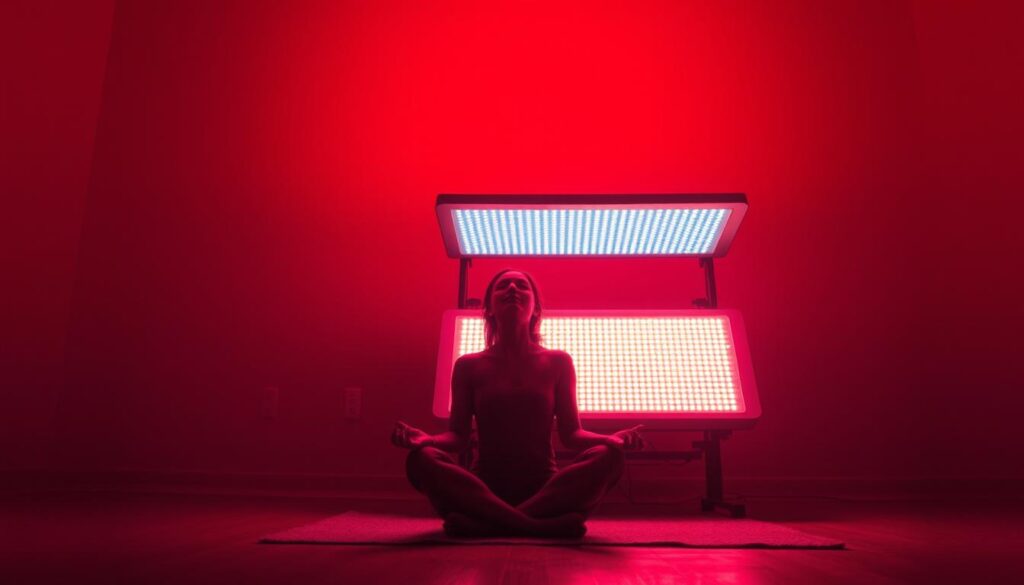
What is Red Light Therapy (RLT) and How Does It Work?
Red Light Therapy, or LLLT/PBM, uses low-intensity red or near-infrared light. It’s a non-invasive treatment that stimulates cellular processes. This helps in tissue repair and rejuvenation.
The therapy boosts energy in cells, helping the body heal naturally. It improves skin health, reduces inflammation, and aids in muscle recovery. It’s also used for pain management and to enhance overall well-being.
| Benefits of RLT | Description |
|---|---|
| Improved Skin Health | RLT stimulates collagen production, reducing fine lines and wrinkles. |
| Reduced Inflammation | The therapy helps in minimizing inflammation, aiding in faster recovery. |
| Enhanced Muscle Recovery | RLT is used by athletes to speed up muscle recovery after intense workouts. |
The Complementary Nature of Mindfulness and Light Therapy
Mindfulness practices, like meditation and deep breathing, enhance Red Light Therapy’s relaxing effects. Together, they form a holistic treatment. This addresses both physical and mental well-being.
Practicing mindfulness during RLT sessions helps individuals stay present. This maximizes the therapy’s benefits. The combination leads to deeper relaxation and lower stress levels.
Why Mindfulness Matters During Your RLT Sessions
Mindfulness is key to getting the most out of Red Light Therapy (RLT) sessions. It helps people use RLT’s benefits better. This leads to better relaxation, pain control, and overall health.
The Science Behind Mindfulness During Light Therapy
Studies show mindfulness boosts how the body reacts to light therapy. Being mindful during RLT lowers stress and boosts relaxation. This happens because mindfulness affects the brain’s healing centers.
Common Challenges of Staying Present During Treatment
Staying present during RLT can be tough. Some common issues are:
- Distractions from the environment, like noise or discomfort
- Mental wandering, where the mind strays from the moment
- Physical discomfort, such as pain or stiffness
To overcome these, people can make their space comfy. They can also use guided mindfulness exercises.
Preparing Your Mind and Body for an Effective Session
To get the most out of Red Light Therapy (RLT), you need to prepare your mind and body. A calm and focused state of mind, along with a well-prepared environment, can boost the therapy’s effects.
Creating the Optimal Environment for Mindful RLT
Start by making your space perfect for RLT. The room should be quiet and comfortable with a good temperature. You might want to dim the lights around the RLT device to focus better.
It’s also key to place the RLT device right. Always follow the manufacturer’s instructions for the best spot.
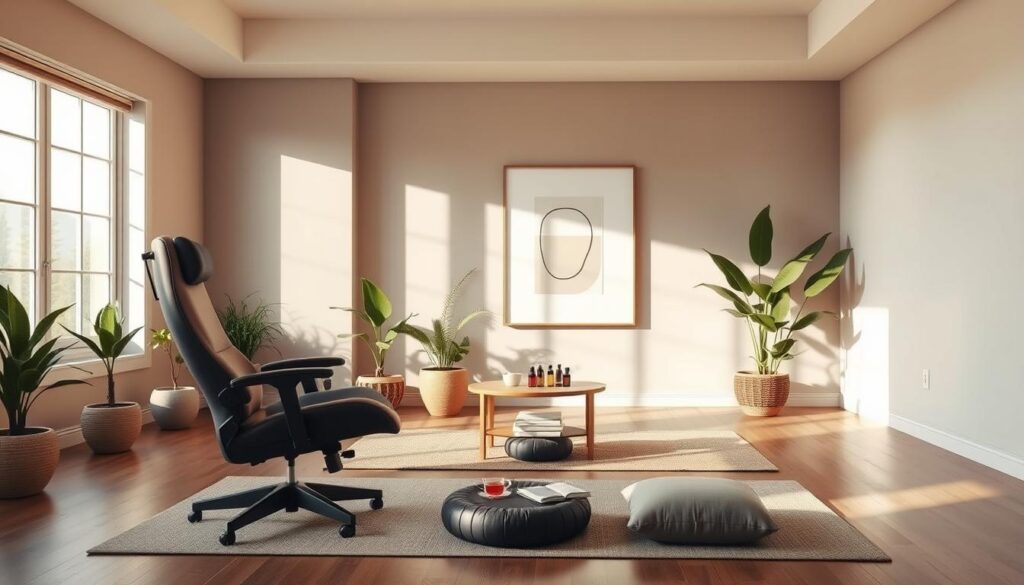
A clean space helps too. Clear the area around your RLT device. Remove anything that might take your attention away during the session.
Pre-Session Mental Preparation Techniques
Getting your mind ready is just as important as setting up your space. Start by taking a few deep breaths. This helps calm your mind and focus on the moment.
Try a short meditation or visualization to center yourself before starting. It helps you get ready for the session.
Having a clear intention for your session is also helpful. Whether you want to reduce stress, improve skin, or recover muscles, knowing your goal can guide the therapy’s effects.
By preparing your environment and mind, you can make your RLT sessions more effective.
Technique #1: Box Breathing for Deep Relaxation
Box breathing is a simple yet powerful technique for deep relaxation. It can be added to your Red Light Therapy routine. This method calms your mind, reduces stress, and boosts the benefits of RLT.

Step-by-Step Box Breathing Instructions During RLT
To practice box breathing during your RLT session, follow these steps:
- Begin by inhaling slowly through your nose for a count of 4, feeling your diaphragm expand.
- Hold your breath for a count of 4, allowing your body to absorb the oxygen.
- Exhale slowly through your mouth for a count of 4, releasing any tension or stress.
- Hold your breath again for a count of 4, completing the “box” shape.
Repeat this cycle several times, focusing on the rhythm of your breath. As you become more comfortable, you can increase the count or focus on the sensation of breathing.
How Box Breathing Enhances Cellular Response to Light Therapy
Box breathing promotes deep relaxation, making RLT more effective. When relaxed, your body better absorbs the light’s benefits. This can lead to improved cellular response and overall well-being.
Tracking Your Progress and Adjusting Your Practice
To get the most from box breathing during RLT, track your progress. You can do this by:
- Maintaining a journal to record your experiences and any changes you notice.
- Noting the frequency and duration of your RLT sessions combined with box breathing.
- Adjusting your practice based on how you feel, either increasing the time spent on box breathing or modifying your breathing pattern.
By combining box breathing with RLT and tracking your progress, you can create a powerful routine. This routine enhances your overall relaxation and therapeutic benefits.
Technique #2: Body Scan Meditation During RLT
Body scan meditation boosts the benefits of RLT. It combines red light therapy with a mindful scan. This can lead to deeper relaxation, less tension, and better therapy results.
How to Perform a Proper Body Scan While Receiving Light Therapy
To do a body scan during RLT, start by getting comfy and relaxing. Close your eyes and breathe deeply. Focus on your toes, noticing any feelings or tension.
Move your attention up your body, scanning each part. If you find tension, let it go as you breathe out. Keep your awareness gentle, without judgment.
This helps you relax more and might make the red light therapy work better. It’s about being aware and accepting your body’s state.
Connecting Body Awareness with Healing Light
Body scan meditation and RLT work together well. Focusing on your body parts can make the red light therapy more effective. This mindful approach can reduce inflammation, improve skin health, and enhance overall well-being.
Troubleshooting Common Body Scan Challenges During Treatment
Some people might find it hard to stay focused or feel restless. If your mind wanders, gently bring it back to the body part. Adjusting your position can help if you’re uncomfortable.
The goal is to be present in the moment, not to achieve a specific state. By adding body scan meditation to your RLT, you can improve your relaxation and well-being.
Technique #3: Mindful Visualization for Enhanced Results
Mindful visualization can make RLT even more powerful. It helps you focus on health goals. By using your mind and red light together, your sessions can be more effective.
Visualization Exercises Specific to RLT Sessions
For the best results with mindful visualization in RLT, follow a clear plan. Start by getting comfy and taking deep breaths. Then, close your eyes and picture a warm light filling your body.
Imagine this light coming in through your head as you breathe in. Picture any stress leaving as you breathe out. This helps you relax.
Imagine the red light therapy device sending out healing energy. See this energy fixing your cells and improving blood flow. With each breath, feel this healing grow stronger.
Using Imagery to Direct Healing Intention to Treatment Areas
Visualize your healing focus on specific body parts for better RLT results. For skin, see the red light boosting collagen and smoothing your skin. For pain, picture the light easing inflammation and fixing tissues.
Adapting Visualizations for Different Health Goals
Mindful visualization is great because it can change with your health goals. Whether you want better skin, less pain, or overall health, you can adjust your visualizations. The goal is to create clear, positive images that help you achieve your health goals.
| Health Goal | Sample Visualization |
|---|---|
| Skin Rejuvenation | Imagine red light energy stimulating collagen production, smoothing fine lines, and improving skin tone. |
| Pain Relief | Visualize the light energy reducing inflammation, soothing nerve endings, and promoting tissue repair in the affected area. |
| Muscle Recovery | Envision the red light penetrating deep into muscle tissue, repairing micro-tears, and reducing soreness. |
Don’t Just Sit There: 3 Mindfulness Techniques to Try During Your Next RLT Session – Implementation Guide
To get the most out of your Red Light Therapy (RLT) sessions, it’s key to add mindfulness techniques. This way, you can boost the therapy’s benefits and feel better overall.
Creating a Sustainable Practice Routine That Fits Your Schedule
Having a regular practice routine is key for mindfulness during RLT. Pick a specific time and day for your sessions and stick to it. Think about your daily schedule and how you feel when planning your routine.
Start small to make your routine work for you. Begin with mindfulness in every other RLT session or just a few minutes each time. As you get more comfortable, you can do more and more.
Measuring and Tracking Your Results Over Time
It’s important to track your progress to see how mindfulness in RLT works for you. Keep a journal or use a mobile app to log your experiences. Note any changes in how you feel after each session.
Look at both how you feel and any measurable changes. You might notice better mood, less stress, or improved sleep. By tracking these, you can adjust your routine to get the most from your RLT sessions.
Combining Techniques for Maximum Therapeutic Benefit
Using different mindfulness techniques together can bring out the best in RLT. This way, you get a full treatment that helps both your body and mind.
Creating Your Personal Mindfulness Protocol for Different Sessions
Creating a personal mindfulness plan means picking the best techniques for you. Start by trying out different mixes of box breathing, body scan meditation, and mindful visualization during RLT.
- Start with box breathing to calm your mind and get ready for therapy.
- Then, do body scan meditation to notice physical feelings and relax more.
- End with mindful visualization to set your goals for the session.
This step-by-step method lets you customize your mindfulness for the best RLT results.
Adapting Techniques Based on Specific Treatment Goals
Changing your mindfulness plan can help meet different health goals. For example, if you want to reduce stress, use more box breathing and body scan meditation. For managing pain, mindful visualization is key.
Here are some tips for adjusting your techniques:
- For anti-aging, imagine skin and tissues getting younger.
- For better recovery, picture the healing in certain body parts.
By changing your mindfulness techniques based on your goals, you can get the most from RLT.
When to Use Each Technique: Matching Methods to Your Specific Needs
To get the most out of RLT, it’s key to pick the right mindfulness technique for your goals. Whether you want to reduce stress, manage pain, or improve your skin, each goal needs a different approach. Knowing when to use each technique helps you tailor your RLT experience for the best results.
For Stress Reduction and Deep Relaxation
Box breathing is great for those looking to lower stress and relax deeply during RLT. This method involves breathing in for four counts, holding for four, exhaling for four, and holding again for four. This rhythmic breathing calms your mind and body, making the light therapy even more relaxing.
For Pain Management and Recovery Enhancement
Body scan meditation is best for managing pain or speeding up recovery. It involves mentally checking your body for tension or pain. By focusing on these areas and imagining the healing effects of RLT, you might find your pain lessened and recovery faster.
For Skin Health and Anti-Aging Benefits
Mindful visualization is perfect for those wanting to improve skin health and look younger. Imagine the red light deeply penetrating your skin, boosting collagen and refreshing skin cells. This focused visualization can make RLT’s anti-aging effects even stronger, leading to healthier, more youthful skin.
| Mindfulness Technique | Primary Benefit | Recommended Use |
|---|---|---|
| Box Breathing | Stress Reduction, Deep Relaxation | General Wellness, Anxiety |
| Body Scan Meditation | Pain Management, Recovery Enhancement | Chronic Pain, Post-Workout Recovery |
| Mindful Visualization | Skin Health, Anti-Aging | Skin Rejuvenation, Anti-Aging |
Conclusion: Elevate Your RLT Experience with Guided Support
Adding mindfulness to your Red Light Therapy can really boost its benefits. Techniques like box breathing and mindful visualization can make RLT even more effective.
Guided meditations can also elevate your RLT experience. These sessions help you stay calm and focused. This way, you get the most out of your treatment.
Let our guided meditations do the work for you. This combination can lead to a deeper sense of well-being. It maximizes the benefits of your RLT sessions.